

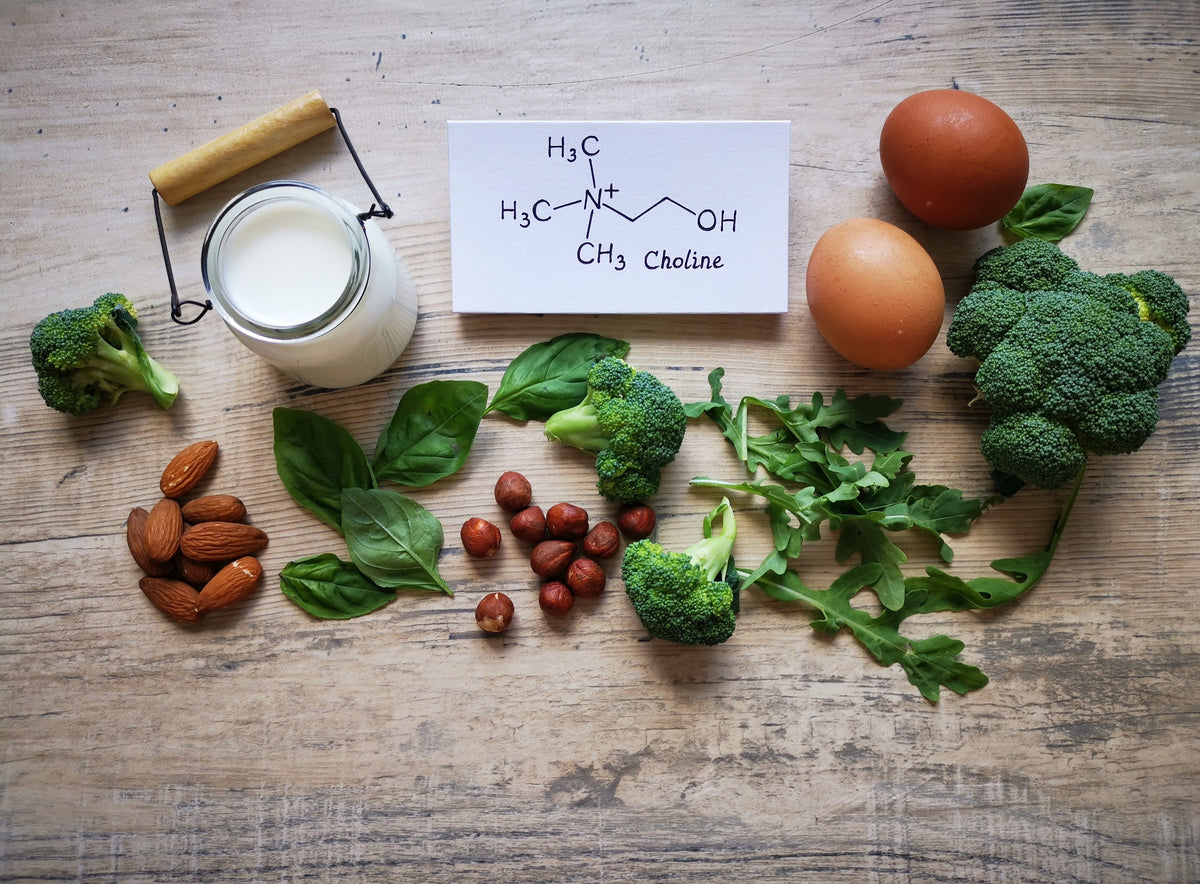
The short answer: choline is an essential nutrient your body uses to build cell membranes, make the neurotransmitter acetylcholine (memory, mood and muscle control) and move fat out of the liver. Your liver makes some choline, but not enough, so the rest must come from food. Adults need 425 mg (women) to 550 mg (men) a day, yet the average American gets 278 mg and 402 mg.
That gap gets wider at a time almost nobody mentions: menopause. Below is what choline does, how much you need, why the requirement changes after 45, and how to close the gap.
What Is Choline?
Choline is a water-soluble nutrient that the U.S. Institute of Medicine recognized as essential in 1998. It is often grouped with the B vitamins because it works alongside folate and vitamin B12, but it is not technically a vitamin.
Your liver produces choline, mostly as phosphatidylcholine, but the amount it makes cannot meet the body's needs (NIH Office of Dietary Supplements). The difference has to come from diet. Unlike most nutrients, choline is rarely on a food label and is not part of routine blood work, so most people never hear about it at a checkup.
What Does Choline Do for Your Body?
Choline has five main jobs:
- Builds every cell membrane. Your body uses choline to make phosphatidylcholine and sphingomyelin, two phospholipids that give cell membranes their structure. Every plant and animal cell needs them.
- Makes acetylcholine. This neurotransmitter carries signals for memory, mood and muscle control, including the signal that tells a muscle to contract.
- Moves fat out of the liver. Phosphatidylcholine is required to package fat and export it from the liver. Without enough choline, fat accumulates there.
- Supplies methyl groups. Choline is a source of methyl groups, used in dozens of metabolic steps, including keeping homocysteine in check alongside folate and B12.
- Supports cell signaling and gene expression. Choline-derived molecules help cells communicate and regulate which genes are switched on.
In studies where adults were fed a choline-deficient diet, the first signs were muscle damage and fatty liver (NIH ODS). Frank deficiency is rare in healthy people, but intake below the recommended level is common.
How Much Choline Do You Need?
Because there is not enough data for a formal RDA, the Food and Nutrition Board set Adequate Intakes (AIs) based on the amount that prevents liver damage.
| Group | Adequate Intake (mg/day) | Average U.S. intake (mg/day) |
|---|---|---|
| Men 19+ | 550 | 402 |
| Women 19+ | 425 | 278 |
| Pregnancy | 450 | Not reported |
| Breastfeeding | 550 | Not reported |
Source: NIH Office of Dietary Supplements; average intakes from NHANES 2013-2014.
The Tolerable Upper Intake Level for adults is 3,500 mg a day from food and supplements combined.
Why Choline Needs Change After Menopause
Before menopause, estrogen switches on a liver gene called PEMT, which makes choline. That is why premenopausal women need less choline from food than men do. When estrogen falls, that internal supply drops, and diet has to carry more of the load.
A 2007 study in the American Journal of Clinical Nutrition showed how large the difference is (Fischer et al., 2007). When 57 adults ate a low-choline diet under supervision:
- 80% of postmenopausal women developed signs of liver or muscle dysfunction
- 77% of men did
- only 44% of premenopausal women did
In other words, after menopause a woman's choline requirement looks like a man's, while the official recommendation for women stays at 425 mg. Genetics adds to this: according to the NIH, at least 40% of women carry a PEMT variant that makes the gene less responsive to estrogen even before menopause.
This is one more change of perimenopause that tends to arrive without guidance. A bone density scan and a calcium recommendation are common; a conversation about choline is not. For a broader view, see essential nutrients for post-menopausal health.
Choline and Bone Health
Choline is not usually discussed as a bone nutrient, but population data suggest a link worth watching.
In Norway's Hordaland Health Study of 7,074 adults aged 46 to 49 and 71 to 74, people in the lowest third of blood choline levels had twice the odds of low bone mineral density compared with those in the highest third (Øyen et al., J Bone Miner Res, 2014). The same research group later found dietary choline intake was directly associated with bone mineral density.
These are observational findings. They show an association, not that choline builds bone, and a controlled trial of choline supplementation in postmenopausal women is now examining bone markers directly. What the data do support is simple: an adequate choline intake belongs in a bone-conscious diet alongside calcium, vitamin K2 and magnesium. See bone health beyond calcium.
Choline and Memory
Because acetylcholine is central to memory, choline's role in the brain gets the most attention. The evidence is mixed. In the Framingham Offspring study of 1,391 adults aged 36 to 83, those with higher choline intakes scored better on verbal and visual memory. However, a 2015 systematic review found choline supplements did not clearly improve cognition in healthy adults (both summarized by the NIH ODS). The fair reading: adequate intake supports normal brain function, and there is no clear evidence that more is better. For practical steps, see tips for postmenopausal memory changes.
Best Food Sources of Choline
| Food | Serving | Choline (mg) |
|---|---|---|
| Beef liver, pan fried | 3 oz | 356 |
| Egg, hard boiled | 1 large | 147 |
| Beef top round, braised | 3 oz | 117 |
| Soybeans, roasted | ½ cup | 107 |
| Chicken breast, roasted | 3 oz | 72 |
| Cod, cooked | 3 oz | 71 |
| Red potato, baked with skin | 1 large | 57 |
| Wheat germ, toasted | 1 oz | 51 |
| Kidney beans, canned | ½ cup | 45 |
| Quinoa, cooked | 1 cup | 43 |
| Brussels sprouts, boiled | ½ cup | 32 |
| Broccoli, boiled | ½ cup | 31 |
Source: USDA FoodData Central via NIH ODS.
How much choline is in an egg? About 147 mg in one large egg, almost all of it in the yolk. Two eggs cover roughly 70% of a woman's daily AI. If you eat few eggs or little meat, reaching 425 to 550 mg from food alone takes deliberate planning.
Choline Supplements: Forms and Safety
Supplements typically contain 10 to 250 mg of choline. Common forms include choline bitartrate, phosphatidylcholine and lecithin, and you will also see citicoline (CDP-choline) and alpha-GPC. According to the NIH, no studies have directly compared how well the main forms are absorbed.
Choline is not known to have clinically relevant interactions with medications. Very high intakes, well above the 3,500 mg upper limit, can cause a fishy body odor, sweating, low blood pressure and digestive upset. Gut bacteria also convert some choline into TMAO, a compound under study for links to cardiovascular risk, which is another reason to aim for adequate rather than excessive intake. As with any supplement, review it with your physician.
Where HydroxyBMD³ Fits
Juvent®'s HydroxyBMD³ Bone, Joint & Cardiovascular Supplement System includes VitaCholine® choline, a branded choline ingredient from Balchem, in its AM formula. It sits alongside three other ingredients:
- Bonolive® olive polyphenols, studied in randomized, placebo-controlled trials in postmenopausal women
- MicrobiomeX® citrus flavonoid, included for gut absorption
- K2VITAL™ vitamin K2 as 99.7% all-trans MK-7
The PM formula carries the mineral load: microcrystalline hydroxyapatite, Di-Calcium Malate and Di-Magnesium Malate. Every ingredient is listed by its branded source on the product page. For a closer look at the AM ingredients, read what's in HydroxyBMD³ AM, or see common nutrient gaps after 50.
Vitamins and Vitakins: The Other Half of the Equation
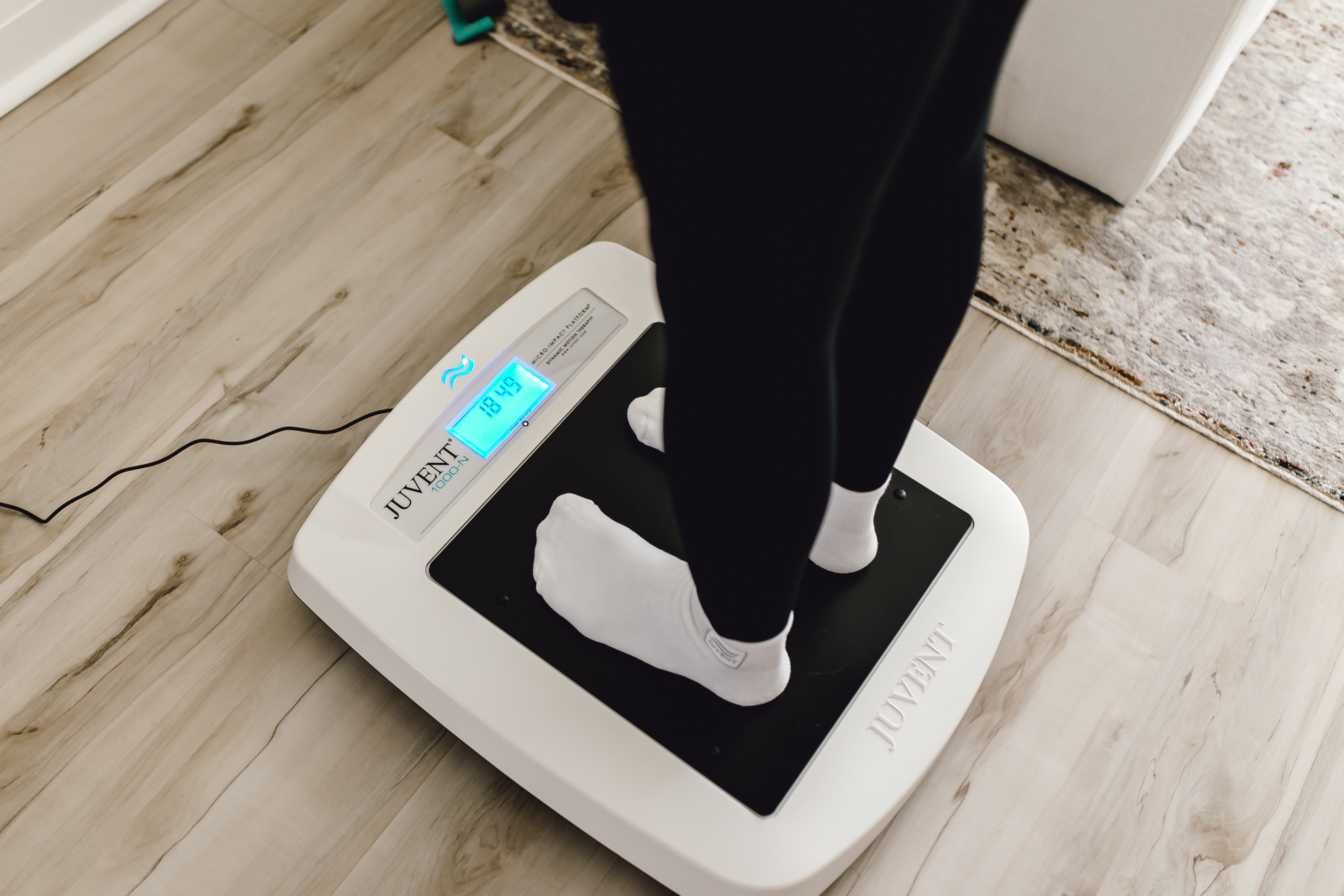
Choline is a chemical input your cells need every day. Bone and muscle also depend on a mechanical input: the impact and loading that walking once delivered with every step. We call that input vitakins, short for vital kinetics. The Juvent Micro-Impact Platform® delivers it at a resonant frequency between 32 and 37 Hz, calibrated to your body at the start of every session. Nutrition and mechanical loading address two different deficiencies; most adults over 45 need attention on both.
Frequently Asked Questions
What is choline good for?
Choline builds cell membranes, makes the neurotransmitter acetylcholine for memory, mood and muscle control, moves fat out of the liver and supplies methyl groups for metabolism.
Is choline a B vitamin?
No. Choline is an essential nutrient that is often grouped with the B vitamins because it works closely with folate and vitamin B12, but it is not classified as a vitamin.
How much choline do I need per day?
The Adequate Intake is 425 mg a day for adult women and 550 mg for adult men. Research suggests postmenopausal women's needs behave more like men's because estrogen-driven production in the liver declines.
How much choline is in an egg?
One large hard-boiled egg contains about 147 mg of choline, nearly all of it in the yolk.
Is it safe to take choline every day?
For most adults, yes, at intakes below the 3,500 mg daily upper limit from food and supplements combined. Typical supplements contain 10 to 250 mg. Review any supplement with your physician.
Should postmenopausal women take choline?
Postmenopausal women make less choline internally, and in one controlled study 80% developed signs of organ dysfunction on a low-choline diet, compared with 44% of premenopausal women. Most women fall short of the 425 mg AI from food, so it is worth reviewing intake with a physician or dietitian.
Sources
- NIH Office of Dietary Supplements. Choline: Fact Sheet for Health Professionals.
- Fischer LM, et al. Sex and menopausal status influence human dietary requirements for the nutrient choline. Am J Clin Nutr. 2007;85:1275-1285. PubMed
- Øyen J, et al. Plasma choline, nicotine exposure, and risk of low bone mineral density and hip fracture: the Hordaland Health Study. J Bone Miner Res. 2014;29(1):242-250. PubMed
- Choline supplementation in postmenopausal women: effects on bone health (ISRCTN82708510)
These statements have not been evaluated by the Food and Drug Administration. This product is not intended to diagnose, treat, cure, or prevent any disease. In the US, the Juvent device is considered investigational for the treatment of osteoporosis or improvement/maintenance of bone mineral density and our claims have not been reviewed or cleared by the FDA to treat any disease or condition. The JUVENT® Micro-Impact Platform® is Registered as a Class I medical device for exercise and rehabilitation. This article is for educational purposes and is not medical advice.

Get the latest insights and contents on all things bone and body health. Signup for our newsletter!
Share:
How to Use a Vibration Plate for Lymphatic Drainage (and What the Research Shows)