


For generations, children were told to drink their milk for stronger bones. The reasoning was that calcium was the central building block of skeletal strength, and that was not altogether wrong. Calcium is essential to sustaining bone health, but today’s research presents a more complete picture; a deeper understanding that can help us make better-informed choices to preserve strength and reduce the risk of fractures as we age.
Bone is living, mechanosensitive tissue that continually renews itself through a process known as bone remodeling. Hormonal changes, inflammation, aging, and the mechanical forces created by movement and weight-bearing activity all influence this process, shifting the balance between the removal of older bone and the formation of new tissue. These factors may initially seem disconnected, but they are all part of the same biological system. Nutrients provide the building materials. Mechanical loading provides an important signal for the body to use them.
Supporting our bones as we age therefore requires a coordinated strategy involving appropriate mechanical loading, multiple nutrients, assessment, and healthy bone-cell activity.
Calcium and Vitamin D Are a Starting Point, Not a Complete Strategy
The relationship between calcium and bone health remains fundamental. If dietary intake is inadequate, the body can draw calcium from the skeleton to support other essential functions. Similarly, the connection between vitamin D and bone health is well established because vitamin D helps the body absorb calcium.
Yet large clinical trials have found that vitamin D supplements did not reduce fracture risk among generally healthy adults who were not selected for vitamin D deficiency, low bone mass, or osteoporosis. That does not diminish either nutrient’s importance or apply equally to people with deficiencies or diagnosed conditions. It shows that taking more is not automatically better. Aging powerfully requires the right nutritional resources combined with the biological signals that encourage bones to use them.
What Is the New Breakthrough to Strengthen Bones?
There is no single breakthrough that unlocks the secret of how to strengthen bones. The more meaningful advancement is a new understanding of the skeleton as a responsive biological system.
Researchers continue to investigate promising biological targets such as CCN3, a brain-derived hormone that stimulates skeletal stem-cell activity and increased bone formation in mice, and GPR133, a mechanosensitive receptor shown in laboratory and animal studies to promote bone formation. These discoveries could eventually contribute to new osteoporosis treatments, but their therapeutic use in humans remains preliminary.
What scientists already know from their research on humans is that bones require mechanical loading to help maintain their strength. Specialized cells known as osteocytes sense movement and weight-bearing forces, translating them into cellular signals that influence remodeling. They help coordinate the activity of osteoclasts, which remove older or damaged tissue, and osteoblasts, which form new bone. Without sufficient loading, the remodeling balance can gradually shift toward bone loss.
Mechanical Loading Gives the Skeleton Important Instructions
Research on how to increase bone density consistently includes resistance and weight-bearing exercise. A large systematic review and meta-analysis found that exercise produced small but significant benefits for bone mineral density at the lumbar spine, femoral neck, and total hip in postmenopausal women. Exercise also supports muscle strength and balance, addressing other factors that influence falls and the risk of a fracture.
However, intense exercise is not always practical or appropriate for someone with fragile bones, limited mobility, joint pain, or an elevated risk of falling.
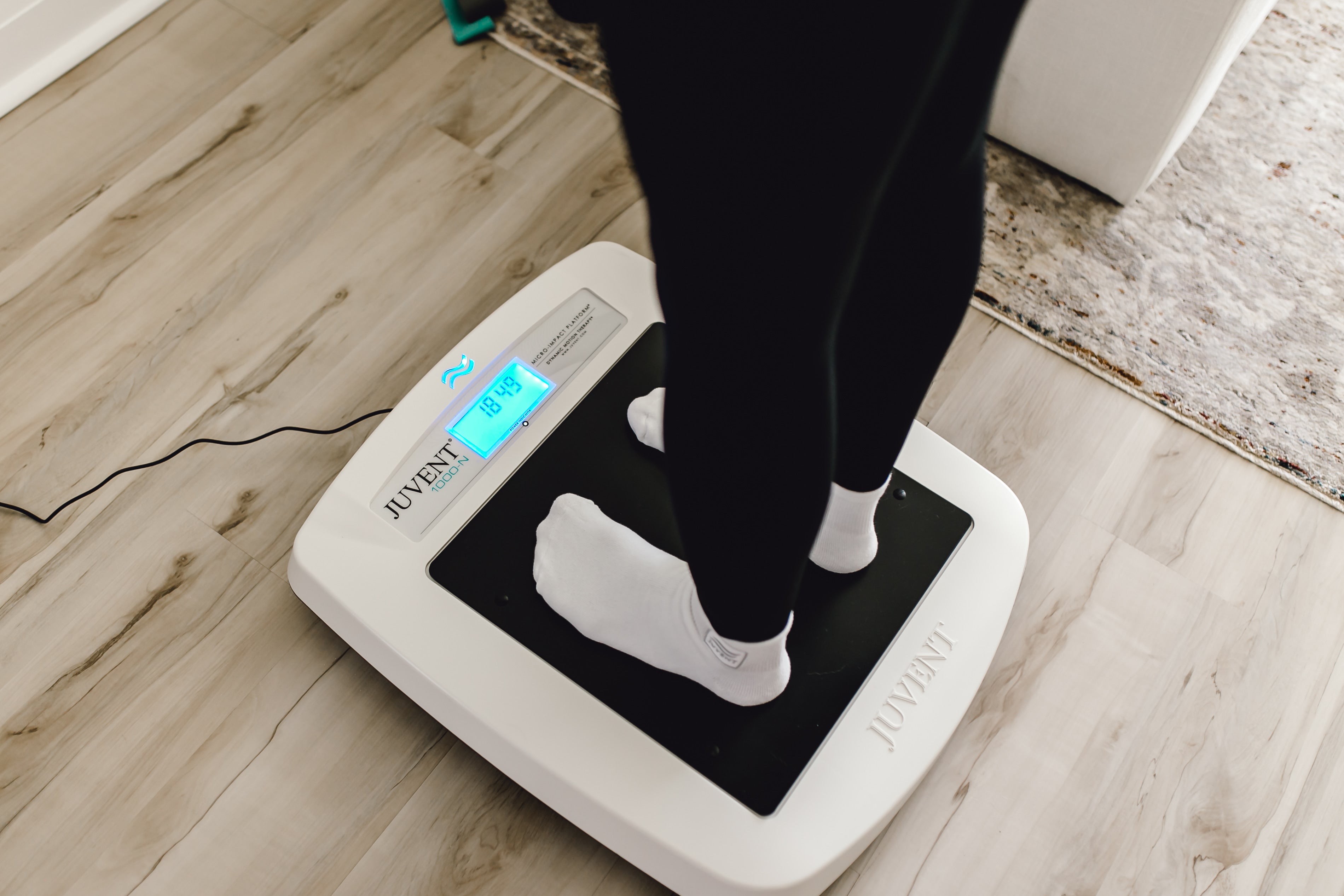
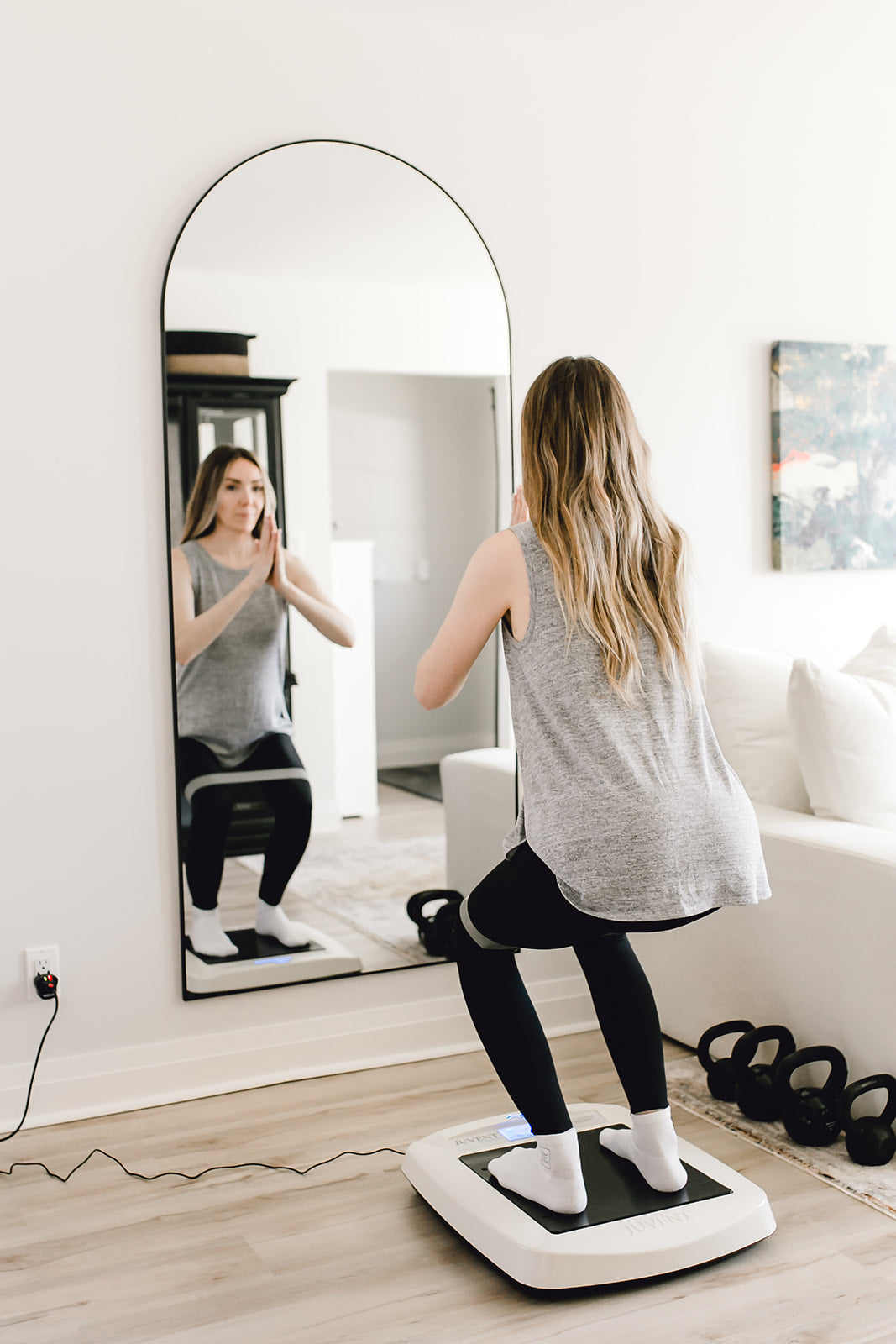
The Juvent Micro-Impact Platform® offers another way to introduce a controlled mechanical signal. Unlike high-powered vibration plates that shake the body, the platform sends calibrated, low-magnitude, high-frequency micro-impacts up through the feet. These signals travel through the skeleton, giving bone and muscle tissue mechanical input while requiring minimal exertion from the individual standing on it. If you're looking for a gentler option, you can explore a low intensity vibration plate for osteoporosis to learn more about how low-magnitude mechanical signals are being studied.
The Juvent Micro-Impact Platform is the product of more than 25 years of research and development and has over 20 patents. The technology behind the Micro-Impact Platform has been evaluated in numerous human clinical trials, including studies involving postmenopausal women, young women with low bone density, and people with health conditions that affect skeletal development or maintenance. Together, this research has examined outcomes such as bone density and structure, muscle function, balance, and mobility.
How HydroxyBMD³ Provides Nutritional Support
Mechanical signals are only one side of the equation. The body must also have the nutrition needed to support remodeling.
HydroxyBMD³ AM/PM is a supplement system developed by Juvent that moves beyond a traditional calcium-only formula by bringing several components of skeletal support together. Its AM formula contains Bonolive®, an olive polyphenol extract studied in osteopenic postmenopausal women.
The AM formula also contains vitamin K2, which activates proteins involved in normal calcium metabolism, and MicrobiomeX®, an ingredient studied for its effects on the gut microbiota and the production of short-chain fatty acids. Broader research into the emerging gut-bone axis suggests that the microbiome may influence inflammation, mineral absorption, and bone metabolism.
HydroxyBMD³ PM provides microcrystalline hydroxyapatite, di-calcium malate, and di-magnesium malate, supplying calcium, phosphorus, and magnesium that support normal bone mineralization and the body’s ongoing remodeling processes.
Support Stronger Bones With Nutrition and Mechanical Loading
A bone density test can provide valuable information about your current bone mineral density and help your healthcare provider determine what nutritional, lifestyle, or medical support may be appropriate.
From there, limiting age-related bone loss requires a more holistic strategy. HydroxyBMD³ provides nutritional building materials that support bone health, while the Juvent Micro-Impact Platform delivers low-magnitude mechanical signals through the skeleton, providing your system with input that supports bone remodeling. Together, this combination of interventions reflects what current research is making increasingly clear: bones need both the resources to renew and signals that encourage them to stay strong.
Consult our FAQs page to learn more, or contact Juvent directly for additional information.
FDA Disclosure
In the US, the Juvent device is considered investigational for the treatment of osteoporosis or improvement/maintenance of bone mineral density, and our claims have not been reviewed or cleared by the FDA to treat any disease or condition. The JUVENT® Micro-Impact Platform® is registered as a Class I medical device for exercise and rehabilitation.
These statements have not been evaluated by the US Food and Drug Administration. These products are not intended to diagnose, treat, cure, or prevent any disease.
Sources:
-
A maternal brain hormone that builds bone [https://www.nature.com/articles/s41586-024-07634-3]
-
The mechanosensitive adhesion G protein-coupled receptor 133 (GPR133/ADGRD1) enhances bone formation [https://www.nature.com/articles/s41392-025-02291-y]
-
Exercise training and bone mineral density in postmenopausal women: an updated systematic review and meta-analysis of intervention studies with emphasis on potential moderators [https://pubmed.ncbi.nlm.nih.gov/36749350/]
-
Primary Clinical Science using the Juvent’s Micro‐Impact Platform® [https://d8oklrjckdahn.cloudfront.net/library/MwGo/2016/4/20/11G094266/JUVENT_Clinical_Studies_2016_JR300303_Rev2-22830de26cf792c0ad55cd312d045545.pdf]
Get the latest insights and contents on all things bone and body health. Signup for our newsletter!
Share:
Vibration Plate For Osteoporosis
The Rise of Longevity Technology: Tools Designed for Better Aging