

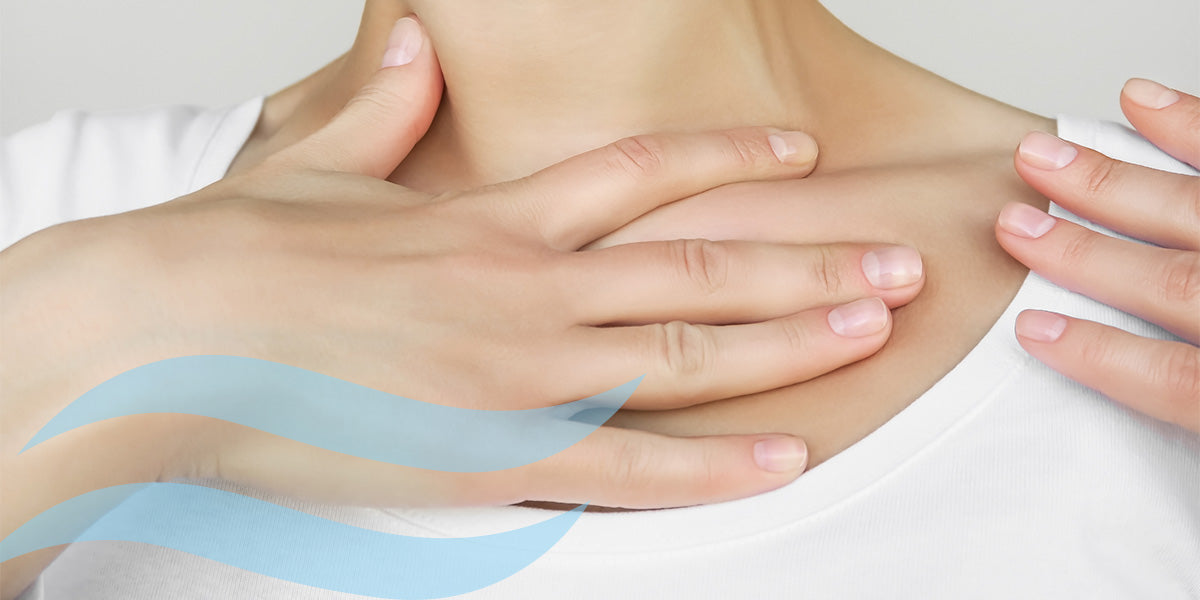
The short answer: a vibration plate can support lymphatic drainage, mainly by making your leg muscles contract in a steady rhythm. Those contractions squeeze lymph vessels and push fluid back toward the heart, the same job walking does. A practical protocol is 10 to 20 minutes, standing with soft knees, most days of the week.
Below: how the lymphatic system moves fluid, what the research actually shows, a step-by-step protocol, the best positions, and who should talk to a clinician before starting.
How Your Lymphatic System Moves Fluid
Your lymphatic system is a network of vessels and nodes that collects fluid leaking from blood capillaries and returns it to the bloodstream, roughly three liters a day. Along the way, lymph nodes filter it for the immune system.
Unlike blood, lymph has no heart to pump it. It moves in one direction through one-way valves, driven by three forces:
- Skeletal muscle contraction. When calf and thigh muscles tighten, they compress nearby lymph vessels and push fluid upward.
- Breathing. Pressure changes in the chest during deep breathing pull lymph toward the large ducts that empty into the veins.
- The vessels themselves. Small lymph vessels contract rhythmically on their own, but this intrinsic pumping is modest.
That first force is the one most adults lose. Long hours sitting or standing still mean the calf muscle pump barely runs, and fluid pools in the lower legs by evening. This is why ankles look puffier after a long flight or a desk day, and why movement is the foundation of every lymphatic drainage approach. For more on this, see how exercise helps lymphatic drainage.
Do Vibration Plates Help With Lymphatic Drainage?
The evidence is specific, so precision matters.
The most direct human study was published in 2005 in the American Journal of Physiology (Stewart et al., 2005). Researchers tested plantar (underfoot) vibration in 18 perimenopausal women aged 46 to 63 while tilting them upright, which normally causes blood and fluid to pool in the legs. Three findings matter:
- Standing upright cut calf and pelvic blood flow by 25% to 35%. Vibration brought it back up.
- Vibration raised the pressure threshold at which fluid begins leaking into the tissues, which the authors attributed to enhanced lymphatic flow.
- The authors concluded the effect works through the skeletal muscle pump: vibration triggers small, rapid muscle contractions that move blood and lymph.
That study is part of the research library behind Juvent® and its low-magnitude mechanical stimulation technology. It is also a small study, run in a lab, on one population. It supports vibration as a way to keep the muscle pump working while you stand. It does not show effects beyond fluid movement, and no plate replaces medical care for diagnosed lymphedema.
The mechanism underneath is called mechanotransduction: cells converting a mechanical signal into a biological response. Walking has always delivered that signal through heel strike and calf contraction. A well-designed plate delivers it in a controlled dose while you stand still.
How to Use a Vibration Plate for Lymphatic Drainage: A Step-by-Step Protocol

This protocol works on most plates. Where low-magnitude platforms differ, it is noted.
Step 1: Check that it's right for you
Read the screening list below first. Sudden swelling in one leg, especially with pain, warmth or redness, needs a doctor before any device.
Step 2: Hydrate and wear flat socks or go barefoot
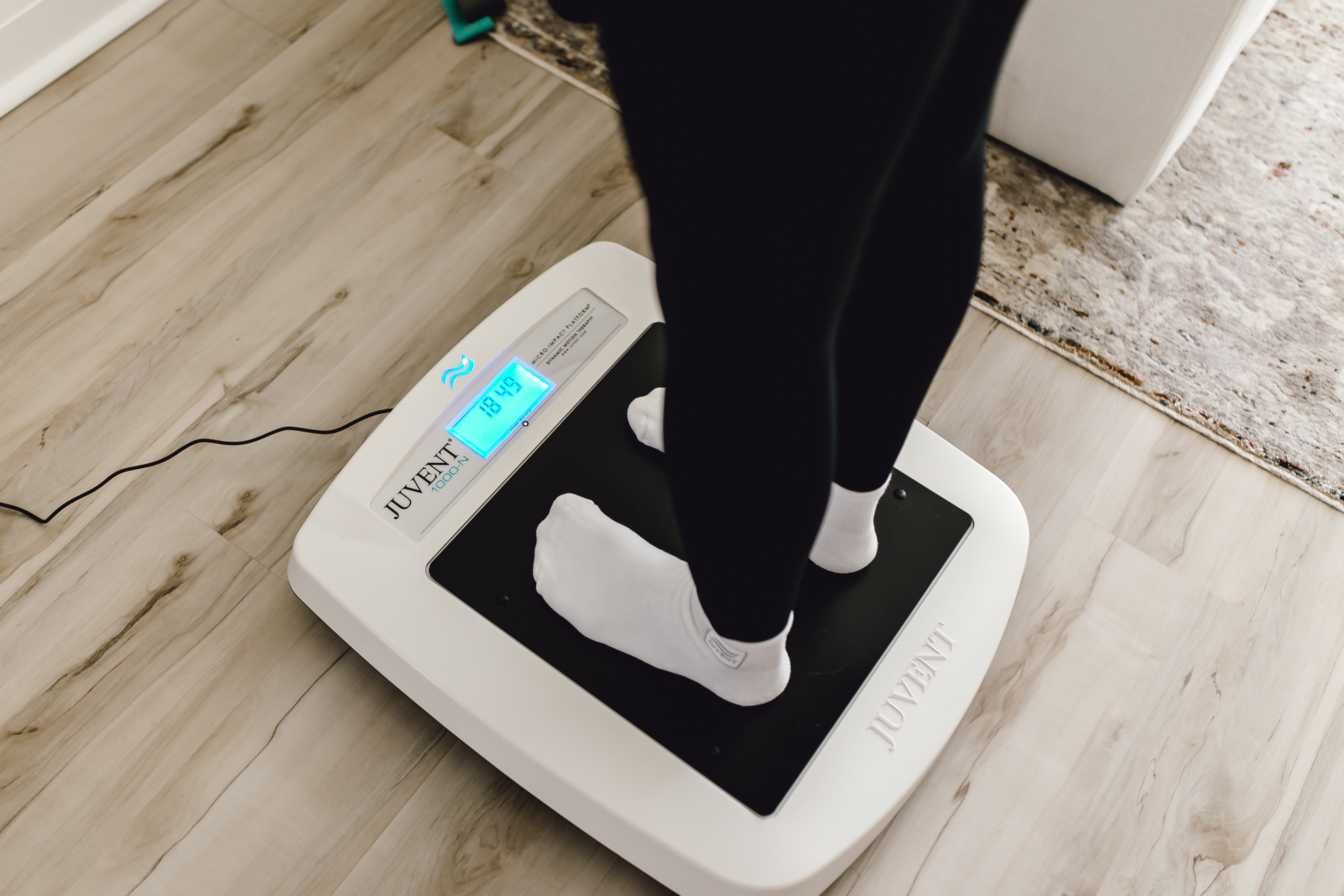
Drink a glass of water beforehand. Lymph is mostly water, and mild dehydration makes it move less freely. Bare feet or thin socks let the signal reach the soles of your feet, where the 2005 study applied it.
Step 3: Take the base position
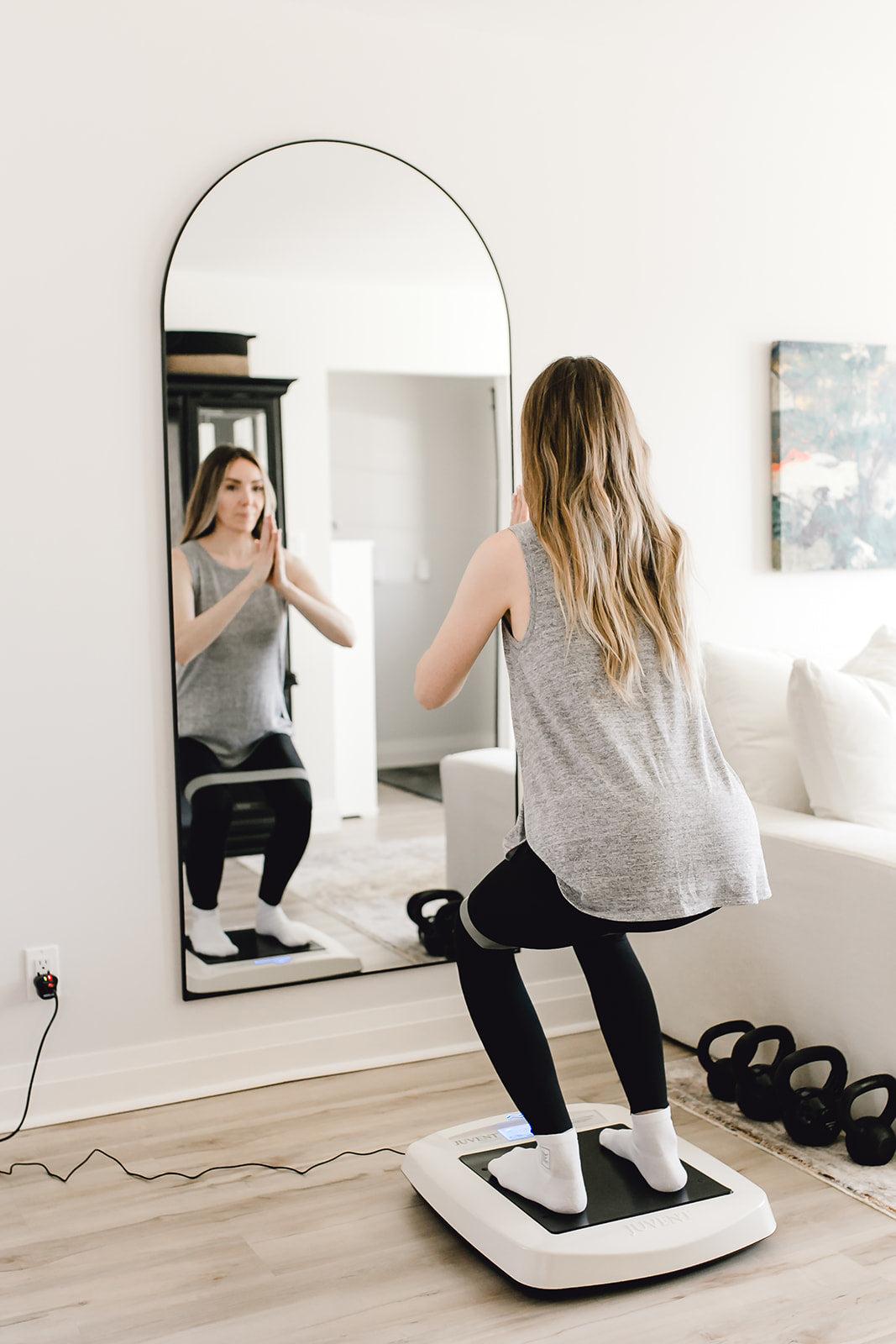
Stand with feet hip-width apart, knees slightly bent (never locked), weight balanced over the middle of your feet. Locked knees let vibration travel up to the hips and head. A soft bend keeps the stimulus in your leg muscles, where the pumping happens. Rest a hand on a rail or counter if your balance is uncertain.
Step 4: Start short, then build to 10 to 20 minutes
Begin with 5 to 10 minutes for the first week, then build to 10 to 20 minutes. On a low-magnitude platform, standing quietly in the base position is the whole session. On a higher-intensity plate, keep the setting low; stronger is not better for lymph flow.
Step 5: Add gentle movement (optional)
On a conventional plate, slow calf raises, small squats and side-to-side weight shifts add voluntary muscle contraction on top of the reflex response. Keep movements slow and controlled. See the positions table below.
Step 6: Finish with deep breathing and a short walk
Step off and take five slow belly breaths, then walk for 2 to 5 minutes. Deep breathing draws lymph toward the chest, and walking keeps the muscle pump running after the session ends.
Best Positions on a Vibration Plate for Lymphatic Drainage
| Position | How to do it | Why it helps |
|---|---|---|
| Soft-knee stand | Feet hip-width, knees slightly bent, arms relaxed | Keeps calf and thigh muscles contracting rhythmically; the base for every session |
| Slow calf raise | Rise onto the balls of your feet over 2 seconds, lower over 2 seconds, 10 to 15 times | Works the calf muscle pump directly, the main driver of lymph return from the lower legs |
| Mini squat | Lower 6 to 8 inches, hold 3 seconds, rise, 8 to 10 times | Engages the thighs and glutes, which move lymph from the upper legs toward the groin nodes |
| Side weight shift | Shift weight slowly from one foot to the other for 60 seconds | Alternates loading between legs, mimicking the rhythm of walking |
| Seated, feet on plate | Sit in a sturdy chair with both feet flat on the plate | An option for limited mobility or balance concerns; the signal still reaches the feet and calves |
How Long and How Often Should You Use a Vibration Plate for Lymphatic Drainage?
Duration: 10 to 20 minutes per session. Beginners should start at 5 to 10 minutes.
Frequency: most days of the week. The lymphatic system responds to regular movement, so a consistent daily protocol does more than an occasional long session.
Best time of day: late afternoon or evening suits most people, because that is when fluid has pooled in the legs after a day of sitting or standing. A morning session works too; consistency matters more than timing.
Why the Type of Vibration Matters
"Vibration plate" covers two very different kinds of machine.
Most vibration technology is built to maximize force: large platform movements at high intensity, with the same fixed settings for every body. Activating the muscle pump does not require that much force. For a closer look at intensity and safety, see the risks of high-intensity whole-body vibration.
Low-magnitude mechanical stimulation (LMMS) is engineered the other way: to minimize force while maximizing signal. The Juvent Micro-Impact Platform® operates at 0.3 to 0.4g, about a third of the force of gravity, at a resonant frequency between 32 and 37 Hz. A movement sensor reads your body composition at the start of every session and calibrates the frequency to you. It is a different category from a shake plate, which is why we call it a Micro-Impact Platform® rather than a vibration plate. Read more in micro-impact therapy vs. whole-body vibration.
If you are comparing machines, our guide to the best vibration plate for lymphatic drainage covers what to look for.
Who Should Check With a Clinician First
Talk to your doctor before using any vibration device if any of these apply:
- A current or past blood clot (deep vein thrombosis), or sudden swelling in one leg
- Pregnancy
- Recent surgery, or a recent joint replacement or implant
- A pacemaker or other implanted electronic device
- Swelling related to heart, kidney or liver disease
- Active infection, open wounds or cellulitis in the legs
- Diagnosed lymphedema, including after cancer care
For diagnosed lymphedema, the standard of care is complete decongestive therapy with a certified lymphedema therapist. Any vibration protocol should be agreed with that therapist as a complement, not a substitute.
Frequently Asked Questions
Do vibration plates really work for lymphatic drainage?
They can support it. In a 2005 study, plantar vibration offset a 25% to 35% drop in leg blood flow during upright standing and improved fluid return, which researchers attributed partly to enhanced lymphatic flow. The effect works through muscle contraction, so it supports, rather than replaces, walking and other movement.
How long should you stand on a vibration plate for lymphatic drainage?
10 to 20 minutes per session, starting at 5 to 10 minutes in your first week. Longer sessions at higher intensity do not move more lymph and can tire your legs.
Can I use a vibration plate for lymphatic drainage every day?
Yes, for most healthy adults at low intensity. Daily, moderate sessions match how the lymphatic system works: it responds to regular movement rather than occasional bursts.
Does a vibration plate help with leg swelling?
It can help limit the fluid pooling that builds up in the legs during long periods of sitting or standing. Swelling from a medical cause, such as a clot or heart, kidney or liver disease, needs a doctor's evaluation first. See lymphatic drainage for leg and ankle swelling.
Can a vibration plate help with lymphedema?
Lymphedema needs care from a certified lymphedema therapist. Some people use vibration as a complement to that care, but only with their therapist's approval. A vibration plate is not a substitute for compression, manual lymphatic drainage or complete decongestive therapy.
Is a vibration plate better than lymphatic drainage massage?
They do different things. Manual lymphatic drainage is a targeted technique delivered by a trained therapist. A vibration plate is a daily, at-home way to keep the leg muscle pump active. Many people use both. See the top myths about lymphatic drainage.
Is a shake plate the same as a vibration plate?
"Shake plate" usually refers to a high-intensity consumer vibration plate. Low-magnitude platforms deliver a much smaller force, calibrated to the user, which is gentler on joints and sufficient to activate the muscle pump.
Sources
- Stewart JM, et al. Plantar vibration improves leg fluid flow in perimenopausal women. Am J Physiol Regul Integr Comp Physiol. 2005;288(3):R623-R629. PubMed
- Juvent clinical research library
In the US, the Juvent device is considered investigational for the treatment of osteoporosis or improvement/maintenance of bone mineral density and our claims have not been reviewed or cleared by the FDA to treat any disease or condition. The JUVENT® Micro-Impact Platform® is Registered as a Class I medical device for exercise and rehabilitation. This article is for educational purposes and is not medical advice.

Get the latest insights and contents on all things bone and body health. Signup for our newsletter!
Share:
Understanding How Circulation Affects Digestive Function
What Is Choline? What It Does for Your Body, and Why Needs Change After 45