

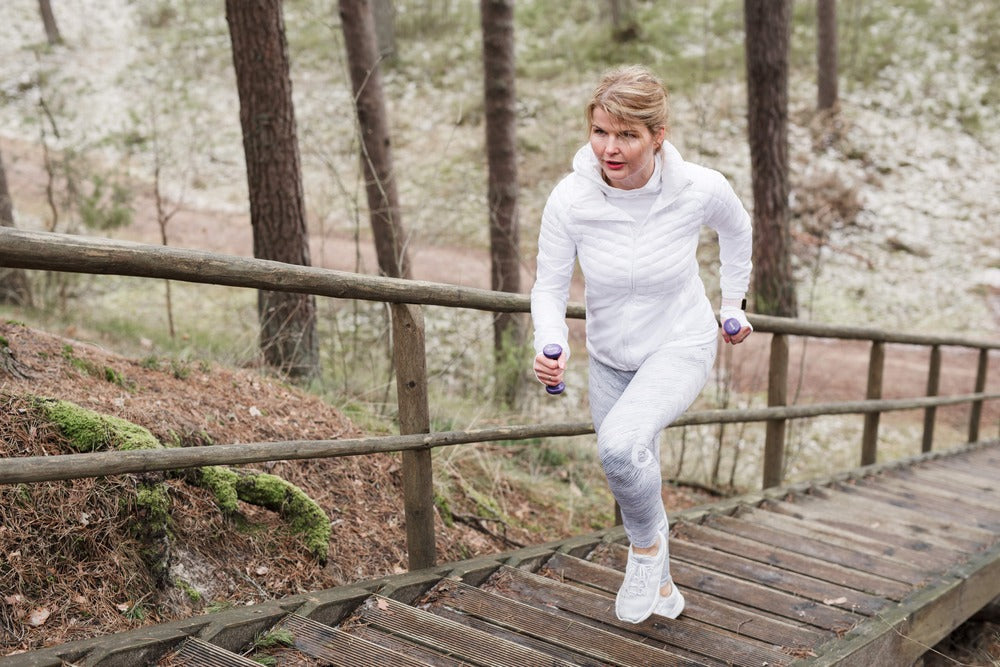
Load-bearing exercises do more than strengthen your muscles and keep you fit. By working against gravity or resistance, load-bearing movement places controlled stress on your skeleton, prompting bones to adapt and become stronger and more resilient. When you go for a brisk walk, dance, practice yoga, or climb the stairs, these activities increase bone density and improve bone health. To prevent fractures, building strong and healthy bones is crucial.
Why Do Weight-Bearing Exercises Increase Bone Strength?
Weight-bearing (or load-bearing) exercises or activities cause your muscles and tendons to apply tension to your bones, stimulating the production of more bone tissue. This is called ossification, or bone formation.
Bone is living tissue, and throughout your life, it is constantly being broken down by specialized cells called osteoclasts and built up again by osteoblasts. While the process of bone growth and repair is known as ossification, the process during which mature bone tissue is continuously removed and replaced by fresh tissue is called bone remodeling. Bone remodeling is vital for maintaining your skeleton’s structural integrity, repairing microscopic damage and micro-fractures from everyday stress, and maintaining proper calcium and phosphate levels in your blood.
As we age, the rate at which old bone breaks down can surpass that rate at which it’s being replaced, making bones more porous and fragile. During weight-bearing exercises, bone cells called osteocytes signal osteoblasts to deposit more calcium and minerals, creating thicker, denser bones and, in turn, increasing their capacity to withstand stress.
This is why it’s important to incorporate some form of load-bearing exercise in your routines each day.
Weight-Bearing Exercises for Osteoporosis and Bone Strength
While aging slows bone remodelling, it can also lead to avoiding exercise out of fear of falling and breaking a bone; however, avoiding exercise can lead to weakness, making you more vulnerable to injury. To keep bone modeling at its most productive while keeping feelings of anxiety at bay, it’s important to take things slowly.
Here are some low-impact, weight-bearing exercises to strengthen bones:
-
Walking
-
Hill walking
-
Stair climbing
-
Marching
-
Gentle heel drops
-
Mixed movement (walking backwards, sideways, and other directions except straight ahead)
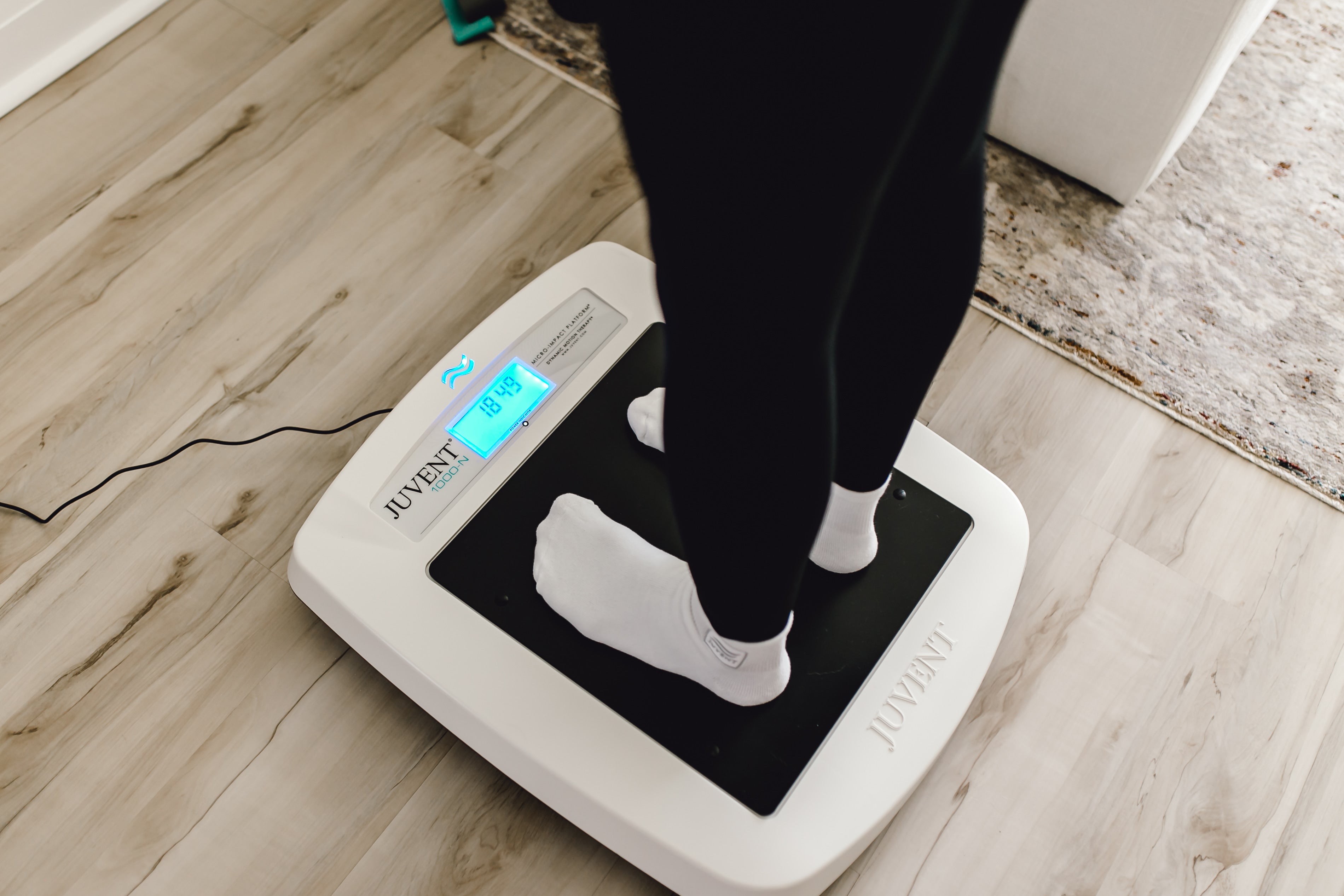
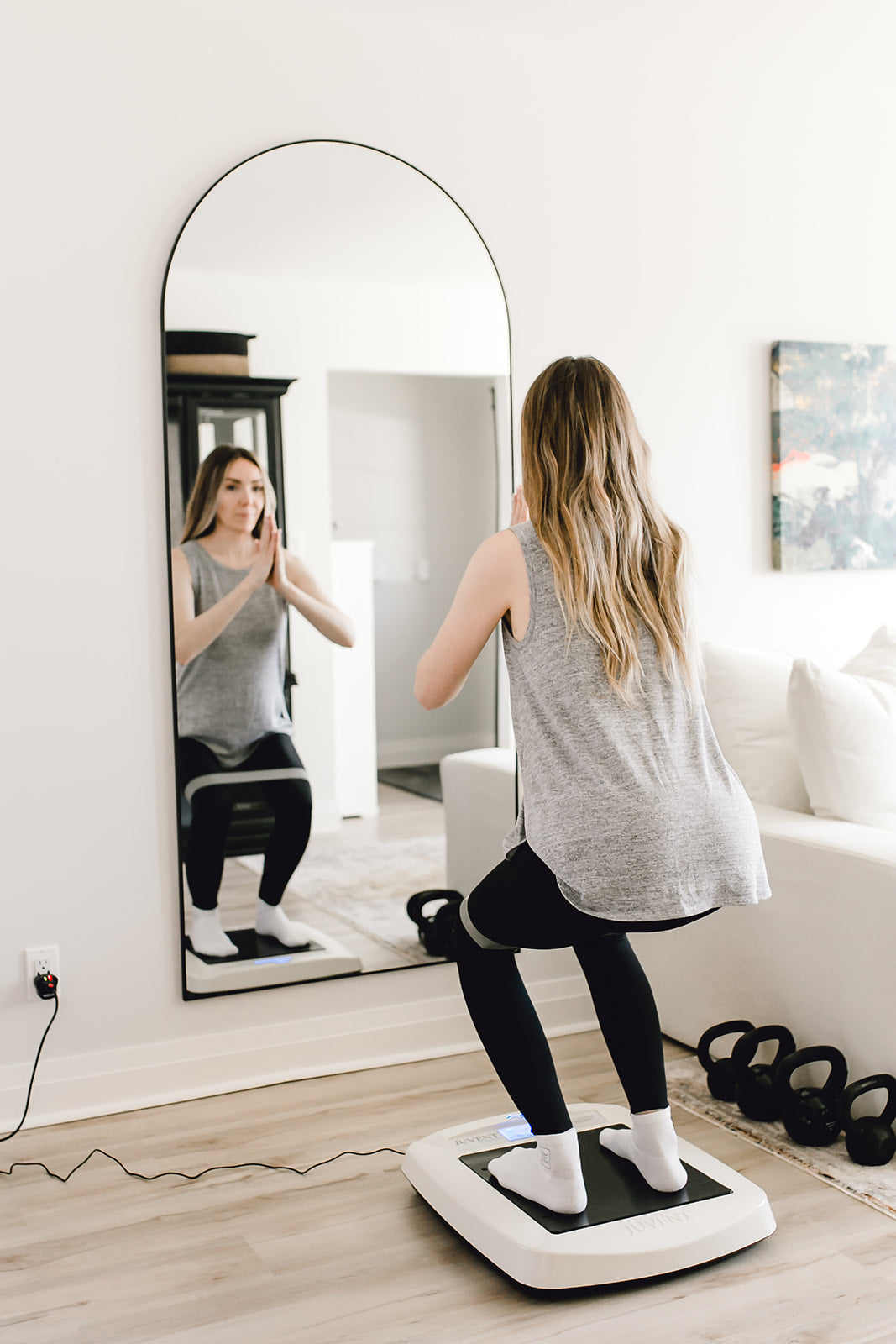
If you haven’t exercised in a while and all this seems like too much, you can start from a seated position and work toward load-bearing exercises as you stand, or you can use the Juvent Micro-Impact Platform®, which does the work for you.
Effects of Movement on Bone Strength
Movement increases bone strength; however, pain, arthritis, or limited mobility can instantly derail even the best intentions. This is where the Juvent Micro-Impact Platform helps you engage in the movement your body needs without placing undue stress or strain on your joints.
The Juvent platform works using patented technology that delivers gentle, precise vibrations at your body’s natural resonant frequency, simulating exercise. This is called low-magnitude mechanical stimulation, or LMMS.
LMMS provides an ideal combination of intelligent software, a high-resolution accelerometer, and precisely optimized vibrations that are calibrated to each individual user. Unlike whole-body vibrations (WBV) “shakers” that operate at a much higher frequency and can lead to injury, the Juvent delivers micro-impacts that self-adjust to avoid injury.
These micro-impacts cause the muscles to contract and relax, similar to the process that’s carried out when you’re engaging in load-bearing exercise.
This movement has been shown to reduce excessive bone breakdown by osteoclasts, supporting a healthy balance between bone loss and bone formation and contributing to overall strength by protecting existing bone.
Innovations in Simulated Movement That Support Bone Strength
The Juvent Micro-Impact Platform has become a trusted choice for individuals and health professionals worldwide. For those seeking at-home solutions to improve bone health without overdoing it, LMMS technology delivers just the right amount of movement in 20 minutes per day.
For those with more severe mobility and weight-bearing issues, certain clinical Juvent models include an ASSIST feature that facilitates seated micro-impact therapy.
A recent customer, A.P., who purchased the 1000N Micro-Impact Platform says, “I wish I had purchased my Juvent years ago! I am 88 years young and was feeling a bit unsteady getting around, especially stairways (afraid of losing my balance). After only a few weeks using Juvent, my legs were definitely stronger, and I found myself walking faster—my balance greatly improved. I can also go up and down stairs and inclines with no problem. Amazing. Thank you, Juvent. Five stars.”
Learn more about maintaining strong bones through gentle daily movement and how the Juvent Micro-Impact Platform can enhance bone health and improve mobility. Get in touch today to find out which Juvent platform is right for you.
FDA Disclosure
In the US, the Juvent device is considered investigational for the treatment of osteoporosis or improvement/maintenance of bone mineral density and our claims have not been reviewed or cleared by the FDA to treat any disease or condition. The JUVENT® Micro-Impact Platform® is Registered as a Class I medical device for exercise and rehabilitation.
Get the latest insights and contents on all things bone and body health. Signup for our newsletter!
Share:
Spring Cleaning for the Gut: Habits That Support a More Comfortable Digestive Rhythm
Why Menstrual Health is Essential to Bone Health. Too Much Exercise Can Be Harmful