


Bone is constantly rebuilding itself through a process called bone remodeling. This is the continuous, lifelong replacement of old bone with new bone, which usually peaks by ages 25-30, after which bone breakdown eventually begins to outpace bone formation. Aside from age, bone remodeling can also be disrupted by hormonal changes, energy deficiency, or inactivity. When the signals that regulate bone turnover become imbalanced, bone can weaken over time.
Research consistently shows that bone density improves when the body receives the right biological cues to favor bone formation. These signals may come from hormones, nutrition, or physical activity, all of which influence how bone cells behave.
The REFUEL randomized controlled trial examined how restoring menstrual function—defined as the resumption of regular menstrual cycles in exercising women who had stopped menstruating or had irregular periods due to energy deficiency—affected bone mineral density and bone turnover markers. The results highlight a key link between menstrual health and bone density, offering insights into the hormonal signaling that regulates bone strength.
Understanding the Link Between Menstruation and Bone Health
For women who exercise intensely, particularly endurance athletes, low energy availability can disrupt normal hormonal cycles. When the body does not receive enough energy to support both exercise demands and basic physiological processes, such as breathing, blood circulation, and tissue repair, reproductive hormones may be suppressed.
This condition, known as functional hypothalamic oligo-amenorrhea, is associated with lower bone mineral density and an increased risk of stress fractures. Hormones play a crucial role in maintaining skeletal health, and disruptions in hormones and bone strength can alter the balance between bone formation and bone breakdown.
Estrogen is especially important because it regulates the activity of bone cells that build and resorb bone tissue. When estrogen levels decline, bone resorption can increase faster than bone formation. This relationship between estrogen and bone remodeling helps explain why hormonal health is a key factor in long-term skeletal strength.
What the REFUEL Study Discovered
The REFUEL trial followed exercising women experiencing menstrual disruption related to low energy availability. Participants increased their energy intake over a 12-month period with the goal of restoring menstrual function.
Researchers found that women who achieved consistent menstrual recovery, defined as at least 2 consecutive cycles of 36 days or fewer, experienced improvements in lumbar spine bone density, along with increases in several bone formation markers.
Notably, the improvements were linked not only to greater caloric intake but also to physiological recovery, as reflected in hormonal changes. Women who recovered also showed higher levels of insulin-like growth factor-1, highlighting the role of IGF-1 and bone health in the rebuilding process.
The Role IGF-1 Plays in Bone Remodeling
IGF-1, which stands for insulin-like growth factor-1, is a hormone that acts as an important messenger in bone metabolism. It promotes the activity of osteoblasts, which are the cells that build new bone tissue, and helps control the balance between making new bone and breaking down old bone.
Higher IGF-1 levels are associated with stronger bone-building activity and help explain the improved bone health in the recovery group. With normalized hormonal signals, the body better shifts toward bone formation and repair.
The study also showed that sustained recovery (not just a single menstrual cycle) was important. Consistent hormonal signaling allows bone remodeling processes to stabilize and gradually improve bone recovery after energy deficiency.
The Signals Bone Responds To
While the REFUEL study focused on hormonal recovery, it reinforces the principles of bone biology: bone tissue responds to both internal biochemical signals and physical stimulation.
Weight-bearing exercise, for example, places mechanical forces on bone that help stimulate bone-building cells. These forces act as signals that encourage bone remodeling and maintain skeletal strength.
This process underscores how gentle mechanical stimulation that mimics natural loading patterns can help improve bone health.
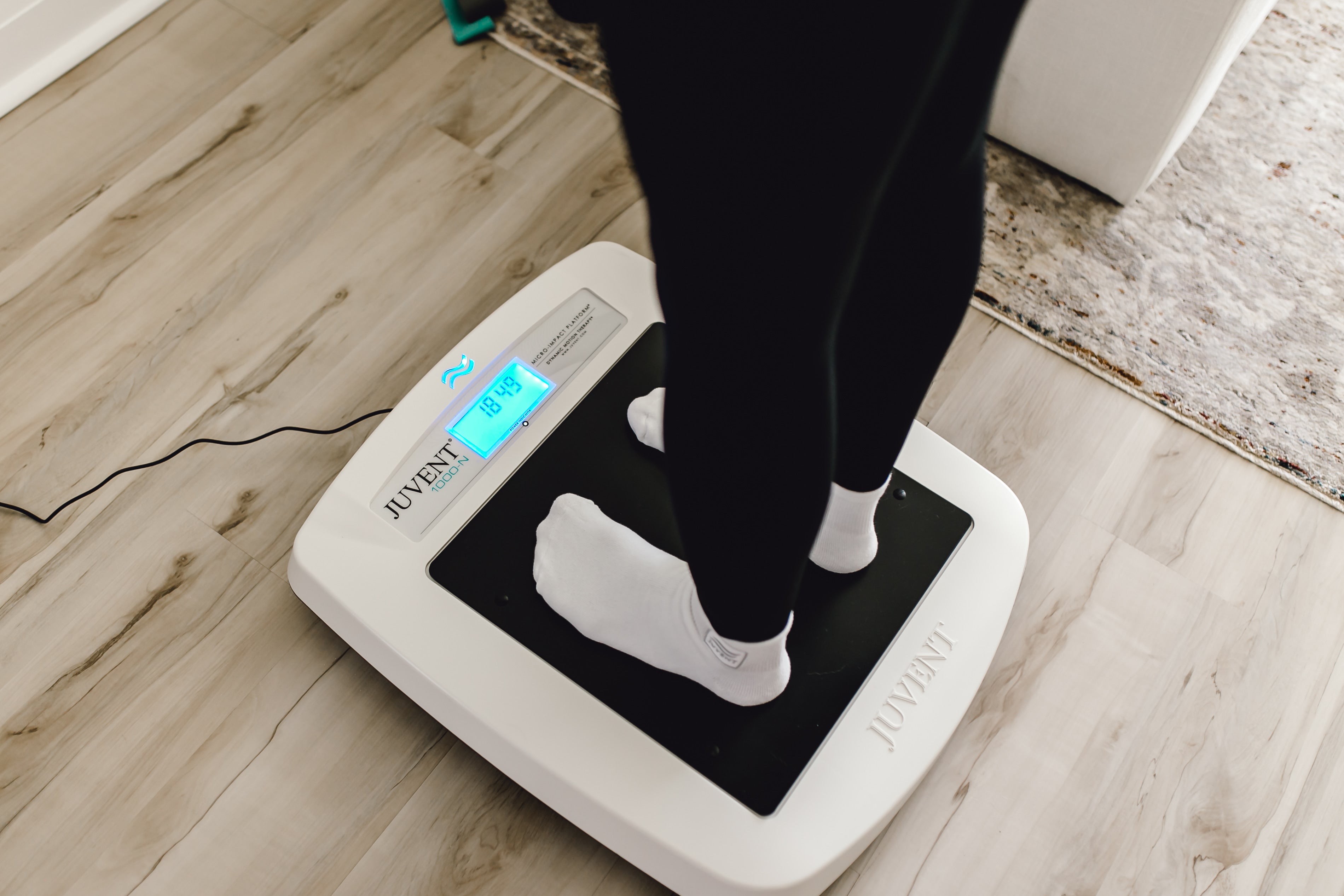
One technology at the forefront of mechanical stimulation is Juvent’s Micro-Impact® Platform. By delivering low-magnitude mechanical stimulation (32-37 Hz), the platform is designed to stimulate the body’s natural bone remodeling processes without the stress of high-impact exercise.
Bone Health and The Body’s Regulatory Systems
The findings from the REFUEL study highlight how closely bone health is connected to the body’s internal regulatory systems. Hormones, energy availability, and mechanical stimulation, whether through exercise or other movement, all contribute to signals that guide bone remodeling.
When these signals work together, the body is better able to maintain strong, resilient bones.
As research continues to uncover the signals that influence bone remodeling, technologies that provide safe mechanical stimulation are gaining attention as supportive tools for maintaining bone health. Juvent’s Micro-Impact® Platform is designed to deliver these subtle signals in a way that complements the body’s natural bone-building processes.
With over 15 published studies examining its effects, the Juvent Micro-Impact Platform has been shown to support a range of health goals for individuals of all ages. It helps promote bone health, improve both circulation and balance, and can help enhance recovery after physical activity.
Get in touch with the team at Juvent to learn more and ask about our rental program, which lets you experience the technology before purchasing your platform.
FDA Disclosure
In the US, the Juvent device is considered investigational for the treatment of osteoporosis or improvement/maintenance of bone mineral density and our claims have not been reviewed or cleared by the FDA to treat any disease or condition. The JUVENT® Micro-Impact Platform® is Registered as a Class I medical device for exercise and rehabilitation.
Sources
- Bone Mineral Density and Bone Turnover Changes With Advanced Menstrual Recovery: The REFUEL Study, Bone. [https://www.sciencedirect.com/science/article/abs/pii/S8756328226000608]
- Female Athlete Triad and Relative Energy Deficiency in Sport (REDs): Nutritional Management, Nutrients. [https://pmc.ncbi.nlm.nih.gov/articles/PMC10857508/]

Get the latest insights and contents on all things bone and body health. Signup for our newsletter!
Share:
Movement Matters: Why Gentle Daily Load-Bearing Supports Bone Strength
Spring Prep for Stronger Bones: How to Ease Back Into Outdoor Activity Safely