


Healthy aging is an active, lifelong adaptation process in which movement and mechanical loading play important roles in maintaining bone health, strength, and mobility.
As interest in non-pharmaceutical approaches to healthy aging continues to grow, researchers have increasingly explored technologies designed to deliver mechanical stimulation in a controlled manner. Among the most widely discussed are whole-body vibration platforms and low-magnitude mechanical stimulation technologies such as Juvent's patented micro-impact therapy.
While these technologies are often grouped together, research suggests they should not be viewed as interchangeable. The magnitude, frequency, duration, and consistency of the mechanical stimulation being delivered may influence both safety and biological response. [2,3,10]
Is There Any Scientific Evidence That Vibration Plates Work?
Today’s scientific literature suggests that not all vibration-based technologies produce the same physiological effects.
Researchers have studied vibration exposure for decades, examining both its potential benefits and its potential risks. Findings indicate that outcomes depend heavily on factors such as force magnitude, exposure duration, frequency, and how the vibration is delivered to the body. [1,2,3,10]
This distinction is important because many consumers assume all vibration platforms operate in a similar manner. In reality, vibration technologies can differ substantially in both design and mechanical output.
Understanding the Research on Whole-Body Vibration
A significant portion of the scientific literature surrounding whole-body vibration focuses on occupational exposure rather than wellness applications.
Studies involving professional drivers, heavy equipment operators, forestry workers, and agricultural workers have identified associations between long-term exposure to higher levels of whole-body vibration and musculoskeletal complaints, including low back pain, neck pain, headaches, and changes associated with spinal health. [1,4,5,6,7]
Researchers have also explored whether prolonged exposure to vibration may contribute to changes in spinal structures, including intervertebral discs. While findings vary across populations and occupations, these studies collectively suggest that uncontrolled, high-energy vibration exposure may pose risks when experienced over long periods. [3,7]
This body of research has contributed to the development of occupational health guidelines for monitoring and managing vibration exposure in workplace environments. [2]
The overarching takeaway from this research is that vibration is not inherently beneficial or harmful. The way it is delivered is what matters. Magnitude, duration, frequency, and consistency all influence how the body responds.
Why Low-Magnitude Mechanical Stimulation Is Different
The body responds to physical forces every day through activities such as walking, climbing stairs, exercising, and maintaining posture. Mechanical stimulation is a normal part of healthy movement.
Researchers studying low-magnitude mechanical stimulation have suggested that carefully controlled mechanical signals may support bone remodeling and musculoskeletal adaptation while operating at substantially lower force levels than many conventional vibration systems. [8,9,10]
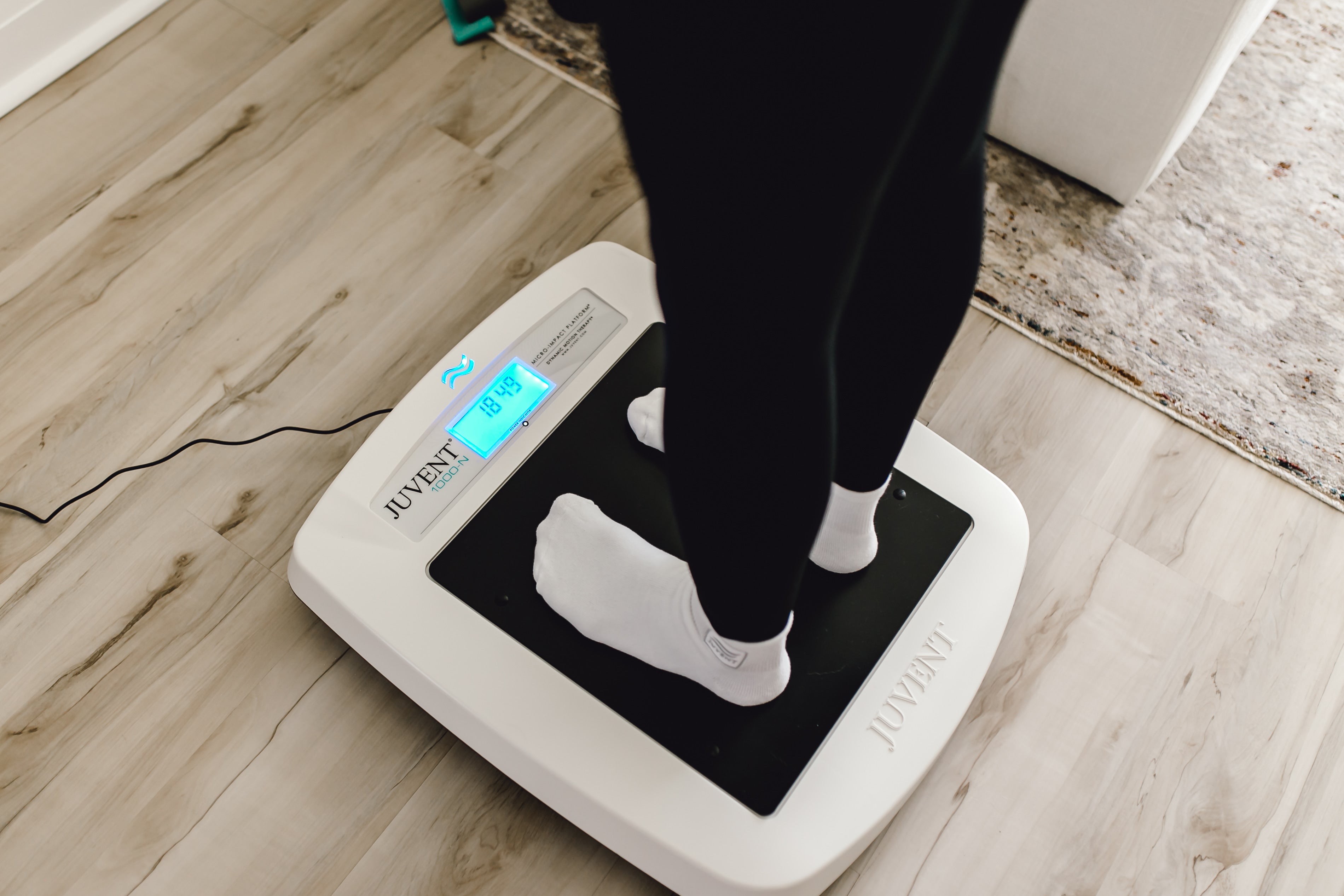
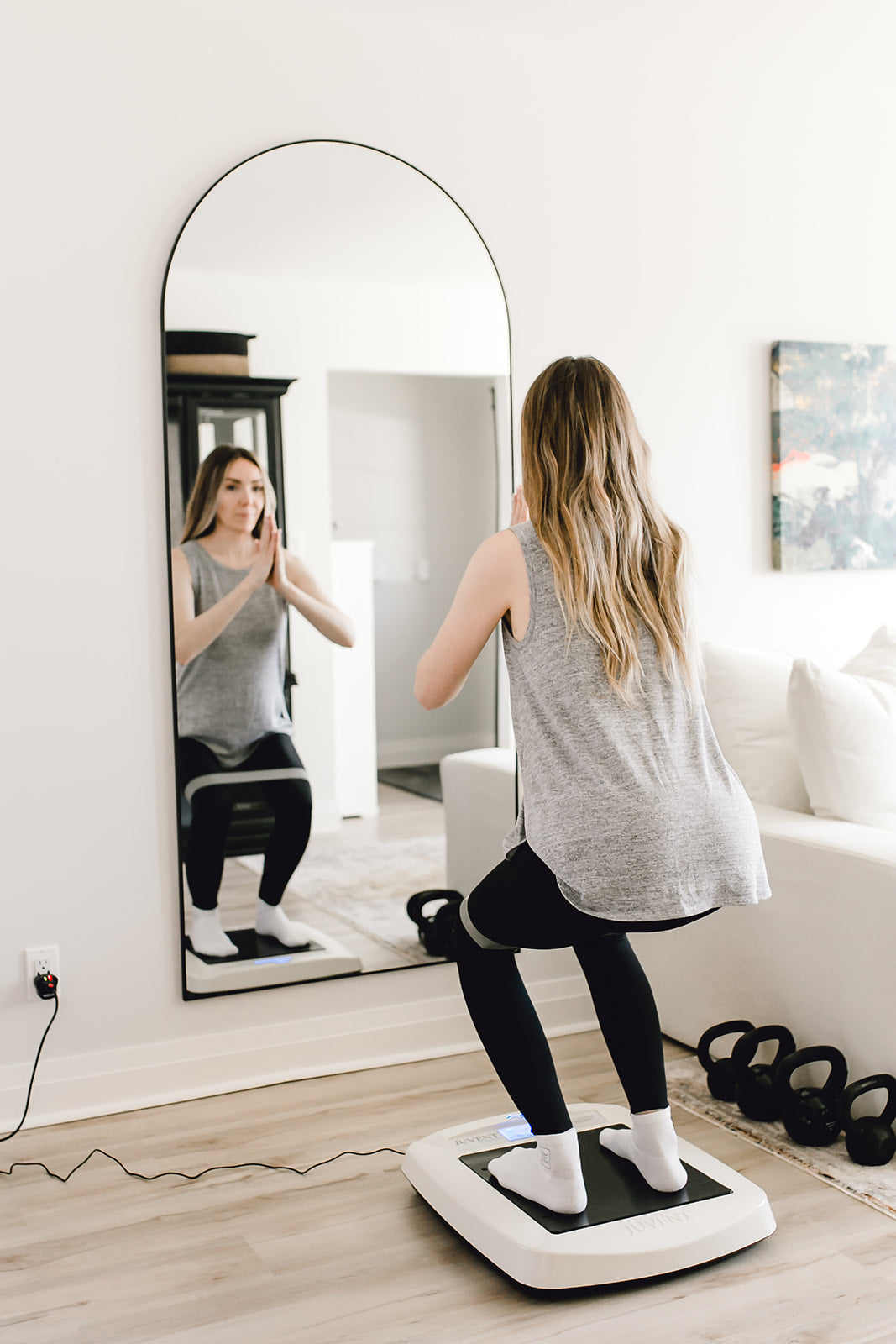
Unlike many traditional vibration technologies, low-magnitude mechanical stimulation is designed to work within a controlled physiological range. Rather than relying on large movements or high force levels, it uses gentle, high-frequency mechanical stimulation delivered through the feet while standing on a platform.
This distinction has become increasingly important as scientists seek to understand how mechanical stimulation can be delivered in ways that support the body's natural adaptive processes while minimizing unnecessary physical stress.
Which Vibration Plate Is Best for Bone Density?
Whole-Body Vibration vs. Micro-Impact Technology
A typical whole-body vibration machine and Juvent's Micro-Impact Platform® may appear similar at first glance because both involve standing on a platform that delivers mechanical stimulation. The similarities, however, largely end there.
According to Juvent's technical documentation, the Micro-Impact Platform® was designed to operate within a low-magnitude range of approximately 0.3–0.4g while delivering controlled, high-frequency stimulation through micro-displacement. The system combines intelligent software, a high-resolution accelerometer, and a precision mechanism that continuously optimizes signal delivery for each individual user.
Unlike many conventional vibration systems that rely on larger platform movements and higher force levels, Juvent's technology uses weight-calibrated signal delivery and self-adjusts to each user's unique resonant frequency. This allows the platform to deliver precisely controlled stimulation while operating at force levels well below many conventional vibration technologies.
A traditional whole-body vibration plate may generate substantially higher forces and less controlled stimulation. Juvent's platform, by contrast, was specifically engineered to deliver low-magnitude mechanical stimulation optimized for healthcare, wellness, and performance applications. To check how any device measures up, review the best vibration plate specifications and how to verify them yourself.
Research-Backed Outcomes
Low-magnitude mechanical stimulation has been investigated across a variety of populations and applications.
A randomized clinical trial involving childhood cancer survivors, for example, investigated the effects of low-magnitude, high-frequency mechanical stimulation on bone-related outcomes and reported findings that support continued research in this area. [8]
Additional research has demonstrated enhanced bone remodeling in animal models exposed to low-magnitude, high-frequency vibration during fracture healing. [9]
Researchers have also explored the broader role of controlled mechanical stimulation in supporting musculoskeletal adaptation and recovery. While outcomes vary across study populations and research designs, the collective body of evidence supports continued investigation into low-magnitude mechanical stimulation as a complementary component of a healthy aging strategy. [8,9,10]
Aging Powerfully Begins With Strong Bones
Maintaining strength, mobility, and independence may depend as much on how much we move as the quality of the mechanical stimulation our bodies experience over time.
Research continues to demonstrate that the body's musculoskeletal system responds to mechanical stimulation and that factors such as force magnitude, frequency, duration, and consistency play important roles in biological response. [9,10]
This growing understanding has helped influence a new generation of regenerative health and longevity technologies designed to work in harmony with the body's natural adaptive systems.
Juvent's patented micro-impact platform therapy was developed around these scientific principles. Backed by more than $45 million in research and development and protected by over 20 patents worldwide, the platform delivers controlled low-magnitude mechanical stimulation informed by decades of research into bone health and musculoskeletal function.
When it comes to preserving strength, mobility, independence, and quality of life, it's never too early to start supporting the health of your bones.
To learn more about the science behind Juvent's Micro-Impact Platform®, visit our FAQs page or contact our team with any questions.
References
-
Bovenzi M, Hulshof CTJ. An updated review of epidemiologic studies on the relationship between exposure to whole-body vibration and low back pain. Journal of Sound and Vibration. 1998;215(4):595-611.
-
Pope MH, Magnusson M, Lundström R, et al. Guidelines for whole-body vibration health surveillance. Journal of Sound and Vibration. 2002;253(1):131-167.
-
Gregory DE, Callaghan JP. Does vibration influence the initiation of intervertebral disc herniation? Spine. 2011;36(10).
-
Milosavljevic S, Bagheri N, Vasiljev RM, et al. Does daily exposure to whole-body vibration and mechanical shock relate to the prevalence of low back and neck pain in a rural workforce? Annals of Occupational Hygiene. 2012;56(1):10-17.
-
Rehn B, Nilsson T, Lundström R, et al. Neck pain combined with arm pain among professional drivers of forest machines and the association with whole-body vibration exposure. Ergonomics. 2009;52(10):1240-1247.
-
Scutter S, Türker KS, Hall R. Headaches and neck pain in farmers. Australian Journal of Rural Health. 1997;5(1):2-5.
-
Luoma K, Riihimäki H, Luukkonen R, et al. Low back pain in relation to lumbar disc degeneration. Spine. 2000;25(4):487-492.
-
Mogil RJ, Kaste SC, Ferry RJ Jr, et al. Effect of low-magnitude, high-frequency mechanical stimulation on bone mineral density among young childhood cancer survivors: A randomized clinical trial. JAMA Oncology. 2016;2(7):908-914. doi:10.1001/jamaoncol.2015.6557.
-
Chow DHK, Leung KS, Qin L, et al. Low-magnitude high-frequency vibration enhances bone remodeling in osteoporotic rat femoral fracture healing. Journal of Orthopaedic Research. 2011;29(5):746-752. doi:10.1002/jor.21303.
-
Nagaraja MP, Jo H. The role of mechanical stimulation in recovery of bone loss—high versus low magnitude and frequency of force. Life. 2014;4(2):117-130. doi:10.3390/life4020117.
Source Note
Technical specifications, platform characteristics, force ranges, intelligent software functionality, resonant-frequency optimization, and comparisons between Juvent's Micro-Impact Platform® and conventional whole-body vibration technologies were derived from Juvent's Differentiating Human Health Benefits: Micro-Impact Therapy vs. Whole Body Vibration technical materials and associated Juvent product documentation.
Sources
- Guidelines for Whole-Body Vibration Health Surveillance, Journal of Sound and Vibration. [https://www.sciencedirect.com/science/article/abs/pii/S0022460X01942531]
- An Updated Review of Epidemiologic Studies on the Relationship Between Exposure to Whole-Body Vibration and Low Back Pain (1986-1997), Journal of Sound and Vibration. [https://pubmed.ncbi.nlm.nih.gov/10473835/]
- Does Vibration Influence the Initiation of Intervertebral Disc Herniation?, Spine. [https://pubmed.ncbi.nlm.nih.gov/21304361/]
- Does Daily Exposure to Whole-Body Vibration and Mechanical Shock Relate to the Prevalence of Low Back and Neck Pain in a Rural Workforce?, Annals of Occupational Hygiene. [https://pubmed.ncbi.nlm.nih.gov/21965463/]
- Neck Pain Combined with Arm Pain Among Professional Drivers of Forest Machines and the Association with Whole-Body Vibration Exposure, Ergonomics. [https://pubmed.ncbi.nlm.nih.gov/19787503/]
- Headaches and Neck Pain in Farmers, Australian Journal of Rural Health. [https://pubmed.ncbi.nlm.nih.gov/9437926/]
- Low Back Pain in Relation to Lumbar Disc Degeneration, Spine. [https://pubmed.ncbi.nlm.nih.gov/10707396/]
- Effect of Low-Magnitude, High-Frequency Mechanical Stimulation on Bone Mineral Density Among Young Childhood Cancer Survivors: A Randomized Clinical Trial, JAMA Oncology. [https://doi.org/10.1001/jamaoncol.2015.6557]
- Low-Magnitude High-Frequency Vibration Enhances Bone Remodeling in Osteoporotic Rat Femoral Fracture Healing, Journal of Orthopaedic Research. [https://doi.org/10.1002/jor.21303]
- The Role of Mechanical Stimulation in Recovery of Bone Loss—High versus Low Magnitude and Frequency of Force, Life. [https://pubmed.ncbi.nlm.nih.gov/25370188/]
Get the latest insights and contents on all things bone and body health. Signup for our newsletter!
Share:
The Science Behind Juvent: How Micro-Impact Therapy Supports Bone Health, Balance, Recovery, and Healthy Aging
What Is Low-Magnitude Mechanical Stimulation? The Science Behind Regenerative Health and Healthy Longevity