

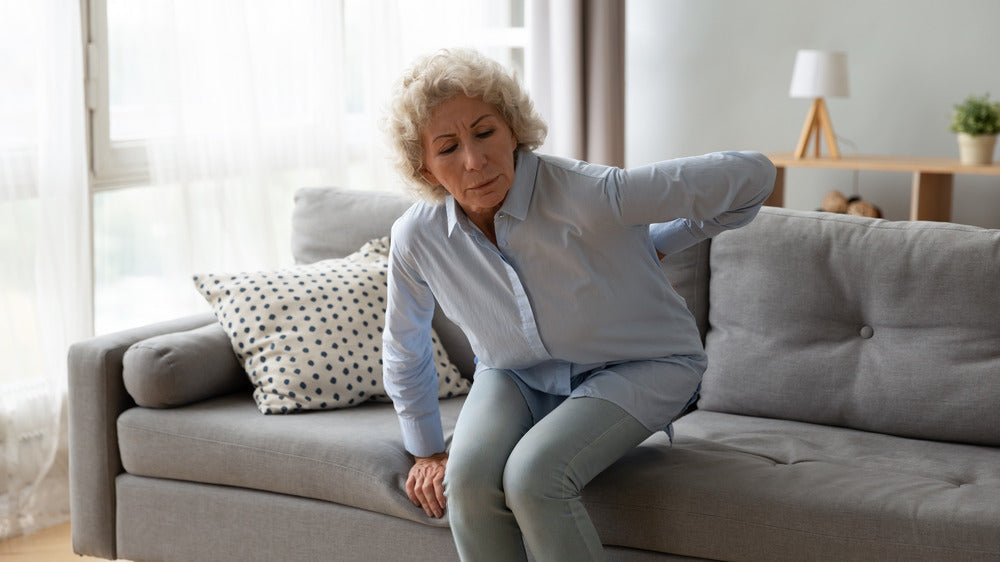
When we think of our skeleton, we often think of the bones as static and structural, holding us upright. But in fact, bone is living tissue constantly undergoing a process called remodeling. Throughout your life, your body continuously breaks down old bone while simultaneously building new bone. In younger adults, these processes happen one after the other, relatively in balance. By around age 30, however, bone breakdown gradually begins to outpace bone formation, leading to a slow decline in bone mineral density over time.
This process of bone resorption accelerates during menopause. As estrogen levels decline, the body’s ability to regulate healthy bone turnover changes. Estrogen plays an important role in helping suppress osteoclasts, the cells responsible for breaking down bone tissue, while supporting osteoblasts, the cells involved in building new bone. When estrogen levels fall, bone resorption can begin occurring more rapidly than bone rebuilding.
The result is reduced bone density, structural weakening, and the potential for fractures. These are some of the primary reasons bone loss after menopause becomes such an important long-term health consideration for women.
Why Menopause Has Such a Significant Impact on Bone Health
Current research continues to confirm the relationship between estrogen and bone loss. Women lose bone density in varying degrees during the late perimenopause phase (about a year before the final menstrual period) and continue through the first few years after menopause. Understanding why bone density decreases after menopause begins with understanding estrogen’s role in healthy bone remodeling and the body’s ability to regulate bone turnover.
Menopausal Hormone Therapy (MHT) remains one of the most widely studied interventions for preserving bone mineral density and reducing fracture risk in some women. Researchers are also exploring newer targeted delivery systems designed to localize estrogen therapy directly to bone tissue while minimizing systemic exposure.
At the same time, studies continue to emphasize the importance of lifestyle changes alongside medical therapies. Integrating weight-bearing exercise and resistance training into daily routines and prioritizing a nutritious diet both play important roles in supporting long-term skeletal health.
Importantly, accelerated bone loss during menopause does not continue indefinitely. For many women, the rate of loss slows within several years following menopause. This means that just before menopause and just after offer important opportunities to focus on bone health strategies that will benefit you over the long term.
How to Increase Bone Density After Menopause
Prioritize Nutrition and Micronutrients
Most people associate bone health with calcium, but the skeletal system requires a wide range of vitamins, minerals, and micronutrients to maintain healthy bone remodeling and mineralization.
A nutrient-rich diet that includes vegetables, fruits, lean proteins, seeds, nuts, and whole grains can help support overall skeletal health and postmenopausal bone health. Certain nutrients, including vitamin D3 and vitamin K2, are particularly important because they help regulate calcium metabolism and bone mineralization.
This is one reason many women are looking into targeted nutritional supplements during and after menopause. Juvent’s HydroxyBMD³™ was formulated specifically to provide key micronutrients that support bone mineralization, joint health, and overall skeletal wellness.
While no single supplement can prevent bone loss, consistent nutritional support can complement healthy habits as part of a comprehensive, health-focused lifestyle.
Movement and LMMS: How Each Can Support Bone Health
Research consistently shows that bones respond to mechanical loading and movement. Weight-bearing activities such as walking, stair climbing, hiking, dancing, and resistance training help maintain and strengthen bones by working against gravity. Strength and resistance exercises can also help support muscle mass, balance, coordination, and overall bone strength after menopause.
For some individuals, high-impact exercise may not always feel practical or comfortable, particularly for those dealing with joint discomfort or mobility limitations. This is where low-impact wellness tools may offer supportive benefits within a broader wellness plan.
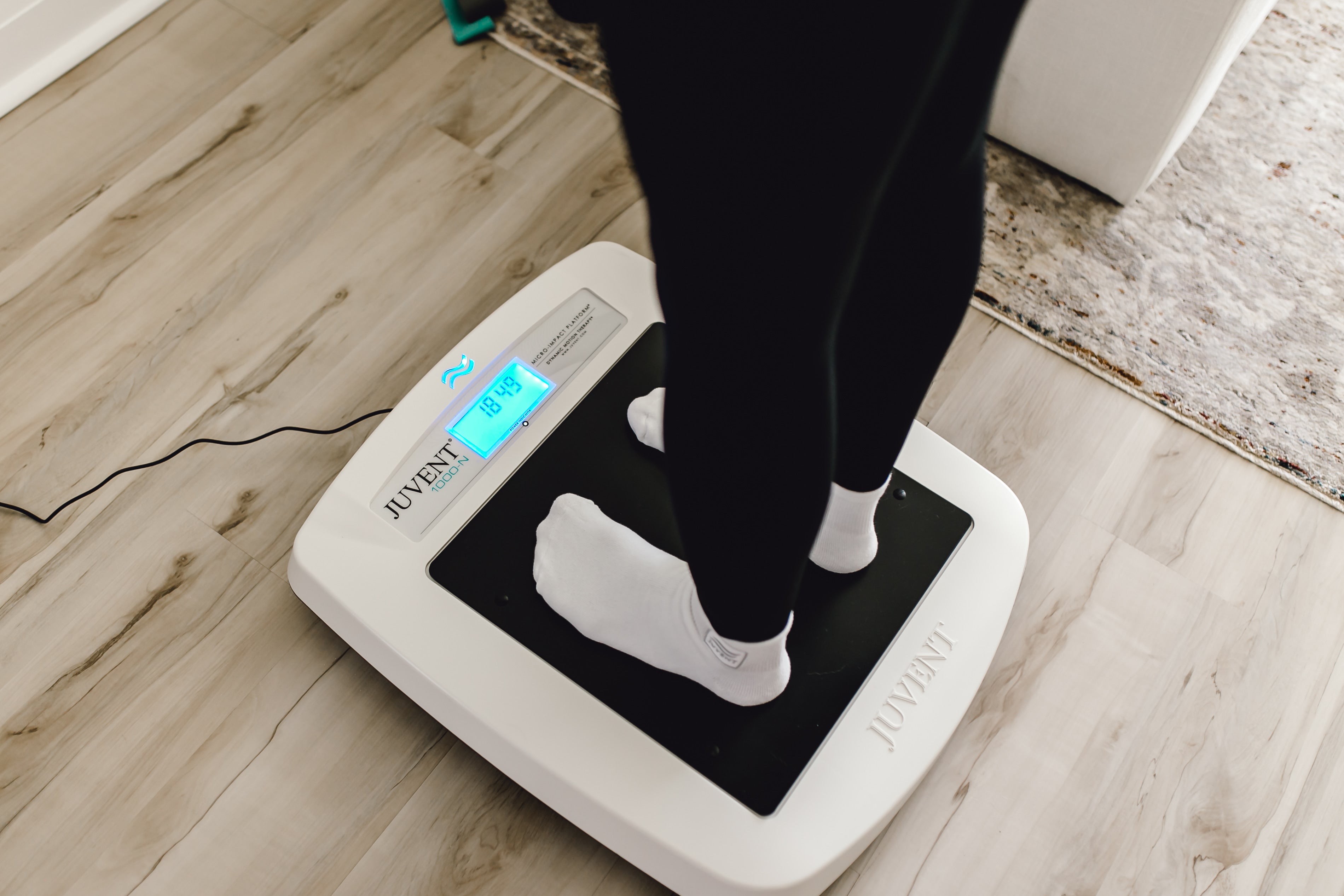
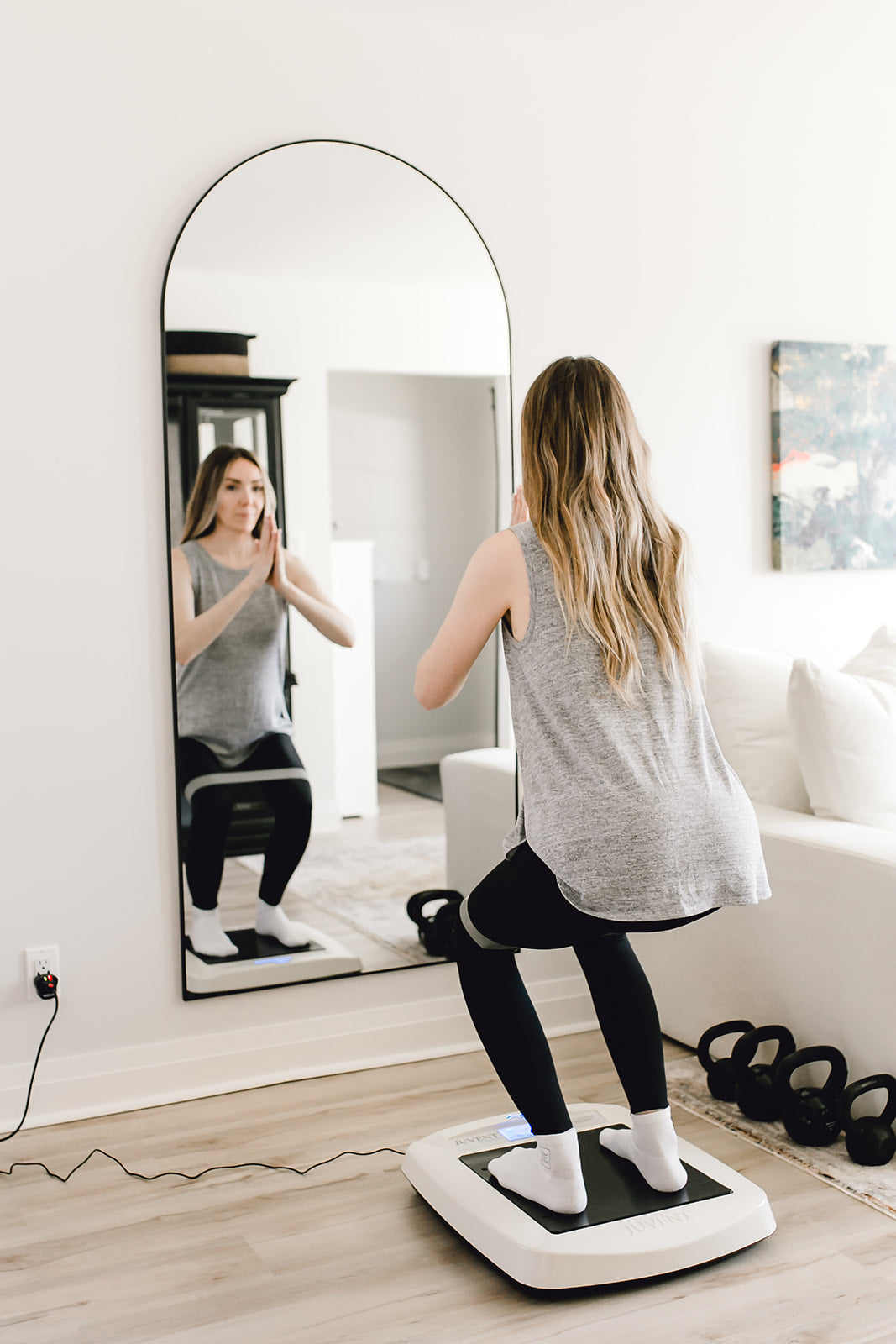
The Juvent Micro-Impact Platform® uses gentle, low-magnitude mechanical stimulation (LMMS) to support healthy circulation and natural movement by transmitting subtle mechanical signals throughout the body. For some individuals, incorporating simulated low-impact movement wellness routines into daily life may help provide the daily exercise needed to support bone health without excessive strain on vulnerable joints. To understand what to look for in a vibration plate for bone health, review key specifications such as magnitude, frequency, and calibration.
Supporting Bone Health Requires a Long-Term Approach
While the fundamental biological mechanics for bone health are the same for all women, the rate and extent of bone loss differ significantly from one person to another. Genetics, activity levels, nutrition, hormonal changes, medications, and overall lifestyle habits all influence how bone density changes over time.
The most effective answer to preventing bone loss after menopause is usually a comprehensive approach that combines physician-guided care, regular movement, balanced nutrition, strength-building activities, and healthy daily habits. Quitting smoking, moderating alcohol intake, and bone density testing may also help support long-term bone health.
While aging-related bone changes are natural, there is a growing understanding that proactive lifestyle choices can meaningfully support strength, mobility, and quality of life for years to come.
Learn more about our HydroxyBMD³ AM/PM supplement system and consult our FAQs page for additional information about the Juvent Micro Impact Platform and its role in a holistic wellness strategy to slow bone loss after menopause.
FDA Disclosure
In the US, the Juvent device is considered investigational for the treatment of osteoporosis or improvement/maintenance of bone mineral density and our claims have not been reviewed or cleared by the FDA to treat any disease or condition. The JUVENT® Micro-Impact Platform® is Registered as a Class I medical device for exercise and rehabilitation.
These statements have not been evaluated by the US Food and Drug Administration. These products are not intended to diagnose, treat, cure, or prevent any disease.
Sources
- Effects of Hormone Therapy and Exercise on Bone Mineral Density in Healthy Women: A Systematic Review and Meta-Analysis, The Journal of Clinical Endocrinology & Metabolism. [https://pubmed.ncbi.nlm.nih.gov/35325147/]
- Bone-Targeted Estrogen Delivery Reverses Postmenopausal Osteoporosis in Mice, American Chemical Society. [https://www.acs.org/pressroom/presspacs/2025/november/bone-targeted-estrogen-delivery-reverses-postmenopausal-osteoporosis-in-mice.html]
- Exercise Training and Bone Mineral Density in Postmenopausal Women: An Updated Systematic Review and Meta-Analysis of Intervention Studies with Emphasis on Potential Moderators, Osteoporosis International. [https://pubmed.ncbi.nlm.nih.gov/36749350/]
Get the latest insights and contents on all things bone and body health. Signup for our newsletter!
Share:
Answering the Most Common Questions About Chronic Joint Pain
Three Protein-Powered Dinners to Help Maintain Strength