

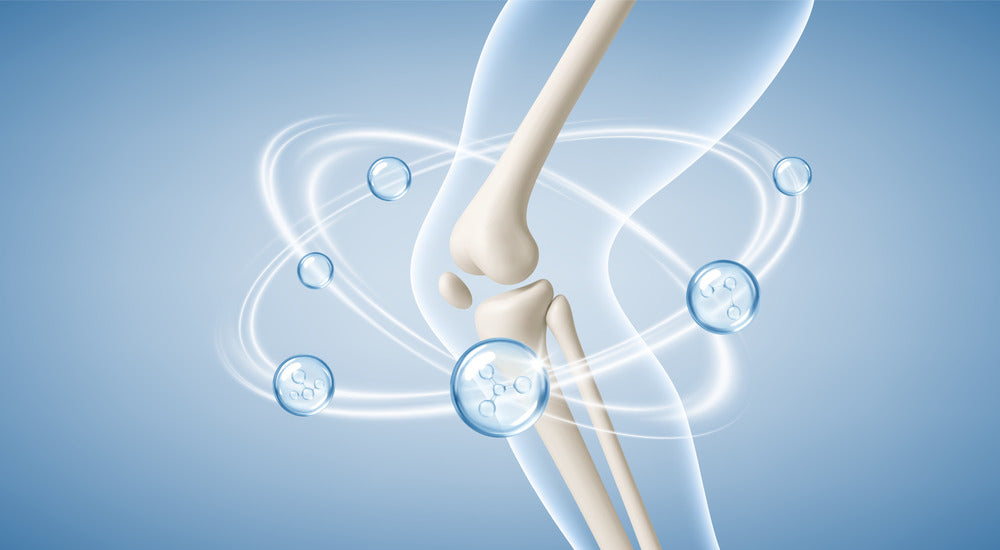
Bone health, balance, healthy aging, and recovery strategies that support mobility and physical performance rarely occupy our day-to-day thoughts until a fall, an injury, or a setback in athletic training quickly brings these concerns into focus.
Over time, physiological changes can affect our mobility, stability, and skeletal strength. Bone density can begin to decline, muscle mass can decrease, and the body's ability to recover from physical stress may become less efficient. While these changes are a normal part of aging, modern research suggests they are not entirely beyond our influence.
Bone Is Living Tissue
Because bone is living tissue, weight-bearing activity remains among the best exercises for bone health. Walking, resistance training, and other forms of movement provide valuable mechanical stimulation that encourages the body to maintain skeletal strength. However, researchers have also begun exploring whether controlled mechanical signals may complement traditional approaches, particularly for individuals whose activity levels may be limited by mobility, injury, or age.
The Science Behind Juvent's Micro-Impact Platform®
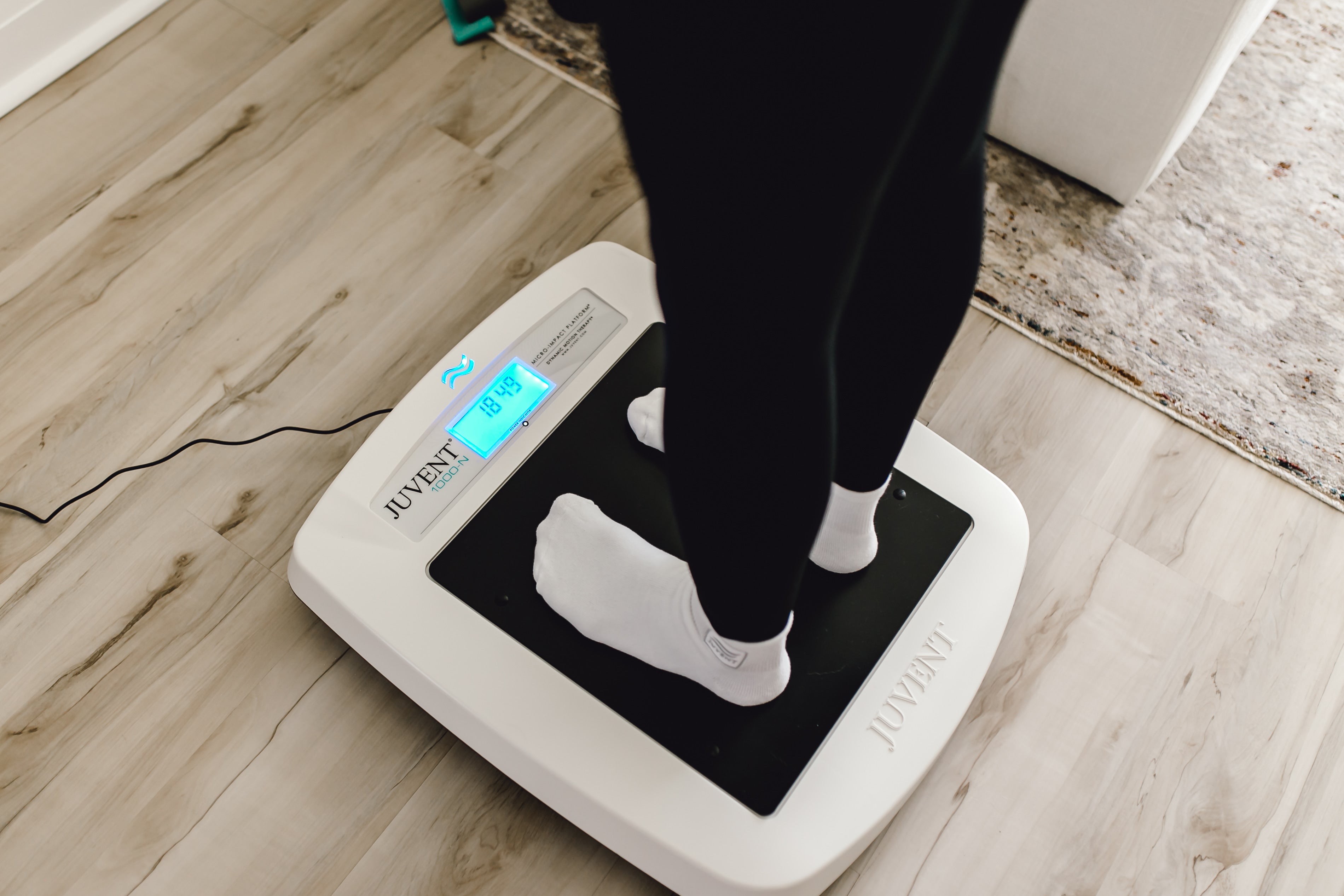
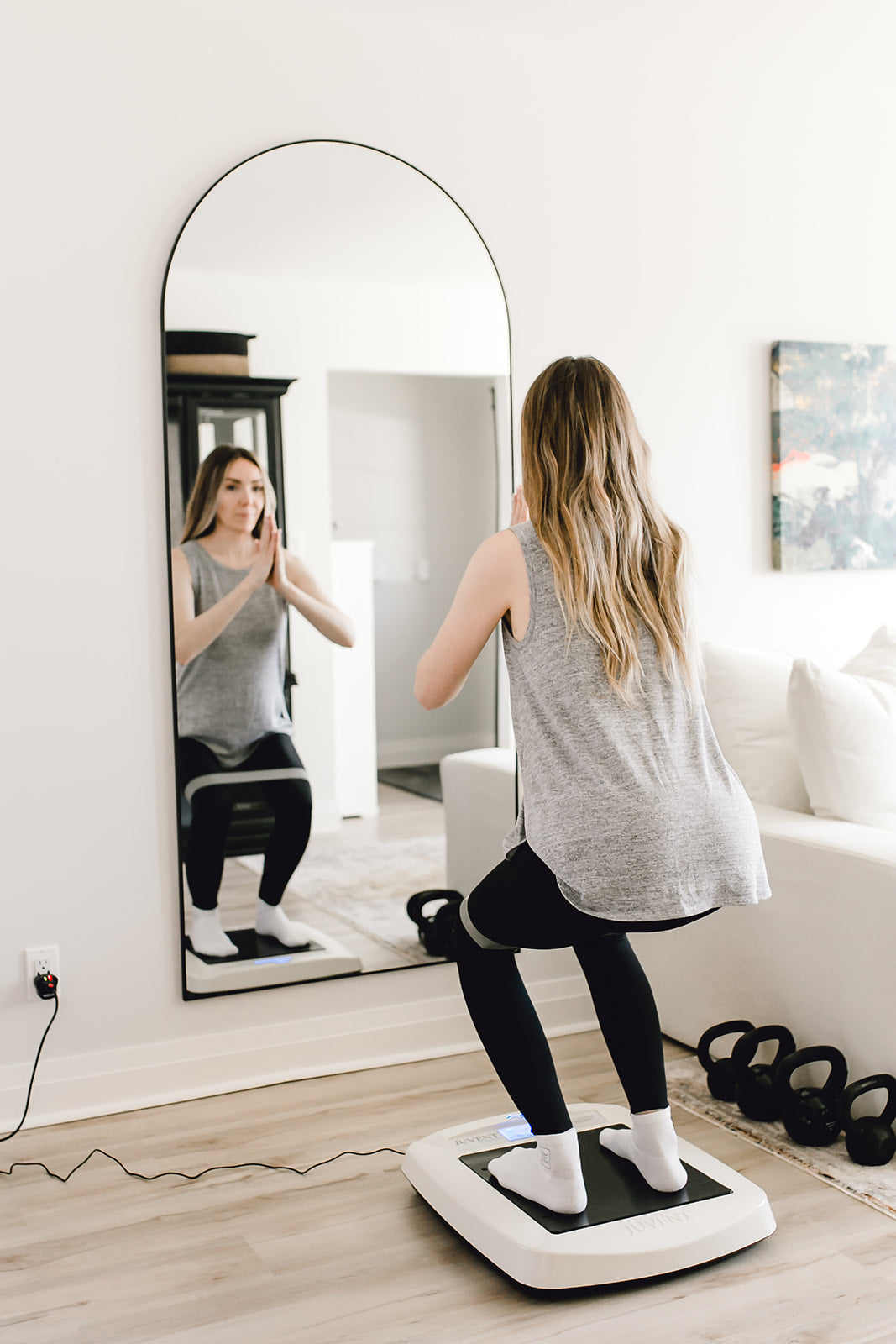
Developed through more than $45 million in research and development and protected by over 20 worldwide patents, Juvent's Micro-Impact platform was designed around the scientific understanding of how the body responds to mechanical signals.
At the heart of the technology is micro-impact therapy, an approach that delivers gentle, precisely controlled mechanical stimulation through low-magnitude mechanical signals. Unlike conventional vibration devices that may produce high forces and variable movement patterns (shakers), Juvent's platform operates within a carefully controlled range of approximately 32-37 Hz and 0.3-0.4g.
Research-Backed Benefits
Bone Density and Skeletal Health
Research involving postmenopausal women, young women with low bone mineral density, and individuals with specific health challenges has demonstrated that low-magnitude mechanical stimulation may support positive bone health outcomes. [3,4] Clinical studies cited by Juvent have reported improvements in trabecular bone density, cortical bone measures, and other indicators of skeletal health, with no significant adverse effects reported in multiple trials. [3,4]
These findings suggest that micro-impact platform therapy may serve as a valuable complement to broader bone health strategies, particularly when used consistently over time.
Balance, Stability, and Mobility
In a study examining prolonged bed rest, participants exposed to low-magnitude mechanical signals experienced smaller declines in knee endurance than those using placebo devices. Researchers concluded that these signals may help support neuromuscular function during periods when normal movement is reduced. [7]
Circulation and Recovery
One clinical study found that low-level stimulation significantly enhanced peripheral blood flow, lymphatic flow, and venous drainage. [8] These physiological responses help explain why researchers continue to investigate the potential role of mechanical stimulation in recovery and healthy aging.
What Makes Juvent Different?
Not all forms of vibration therapy for bone health are the same. Juvent’s unique LMMS is a patented combination of intelligent software, sensors, and a precision mechanism that optimizes a signal personalized to each user’s resonant frequency.
The Juvent platform was specifically designed to operate within a low-magnitude, high-frequency range that remains below one g-force. The platform delivers micro-displacements rather than the larger movements often associated with traditional whole-body vibration devices. According to Juvent's research, this approach supports stable resonance, active feedback, and consistent signal delivery while avoiding many of the characteristics associated with higher-force vibration systems.
A New Perspective on Healthy Aging
While exercise remains essential, a high-quality supplement for bone health may help address nutritional needs, and emerging research suggests that mechanical signaling is another important component of lifelong skeletal wellness. [2,5,6] Bone is not only influenced by what we consume but also by the physical experiences and signals it receives every day.
The science behind Juvent's Micro-Impact Platform® is rooted in this understanding. By delivering gentle mechanical stimulation, the platform is designed to support the biological processes underlying bone health, balance, mobility, and physical recovery.
Supporting Bone Health Starts Earlier Than You Think
The future of healthy aging may lie not only in treating problems after they occur, but in supporting the body's natural ability to adapt, maintain, and repair itself throughout life.
Decades of research have demonstrated that bone responds to mechanical signals in powerful ways. Juvent's patented technology was developed around this principle, providing a safe and practical method for delivering low-magnitude mechanical stimulation that supports skeletal health, mobility, balance, and recovery.
When it comes to preserving strength, independence, and quality of life, it's never too early to invest in the health of your bones.
To learn more about the science behind Juvent's Micro-Impact Platform®, visit our FAQs page or contact our team to discuss your questions and individual wellness goals.
For more on this research, read and download the full whitepaper here.
References
-
Ducher G, Bass SL, Saxon L, Daly RM. Effects of repetitive loading on the growth-induced changes in bone mass and cortical bone geometry: a 12-month study in pre/peri- and postmenarcheal tennis players. Journal of Bone and Mineral Research. 2011;26(6):1321-1329.
-
Xie L, Jacobson JM, Choi ES, et al. Low-level mechanical vibrations can influence bone resorption and bone formation in the growing skeleton. Bone. 2006;39(5):1059-1066.
-
Rubin C1, Recker R, Cullen D, Ryaby J, McCabe J, McLeod K. Prevention of postmenopausal bone loss by low-magnitude, high-frequency mechanical stimuli: a clinical trial assessing compliance, efficacy, and safety. Journal of Bone and Mineral Research. 2004;19(3):343-351.
-
Gilsanz V1, Wren TA, Sanchez M, Dorey F, Judex S, Rubin C. Low-level, high-frequency mechanical signals enhance musculoskeletal development of young women with low bone mineral density. Journal of Bone and Mineral Research. 2006;21(9):1464-1474.
-
Chan ME, Uzer G, Rubin CT. The potential benefits and inherent risks of vibration as a non-drug therapy for the prevention and treatment of osteoporosis. Current Osteoporosis Reports. 2013;11(1):36-44.
-
Nagaraja MP, Jo H. The role of mechanical stimulation in recovery of bone loss—high versus low magnitude and frequency of force. Life. 2014;4(2):117-130.
-
Muir J1, Judex S, Qin YX, Rubin C. Postural instability caused by extended bed rest is alleviated by brief daily exposure to low-magnitude mechanical signals. Gait & Posture. 2011;33(3):429-435.
-
Stewart JM, Karman C, Montgomery LD, McLeod KJ. Plantar vibration improves leg fluid flow in perimenopausal women. American Journal of Physiology-Regulatory, Integrative and Comparative Physiology. 2005;288(3):R623-R629.
Sources
- How Bones Communicate With the Rest of the Body", Smithsonian Magazine. [https://www.smithsonianmag.com/science-nature/how-bones-communicate-with-the-rest-of-the-body-180979643/]
- Impact of Whole-Body Vibration Therapy in Elderly Populations: A Scoping Review, Cureus. [https://pmc.ncbi.nlm.nih.gov/articles/PMC11927757/]
- Effects of Repetitive Loading on the Growth-Induced Changes in Bone Mass and Cortical Bone Geometry: A 12-Month Study in Pre/Peri- and Postmenarcheal Tennis Players, Journal of Bone and Mineral Research. [https://doi.org/10.1002/jbmr.323]
- Low-Level Mechanical Vibrations Can Influence Bone Resorption and Bone Formation in the Growing Skeleton, Bone. [https://pubmed.ncbi.nlm.nih.gov/16824816/]
- Prevention of Postmenopausal Bone Loss by a Low-Magnitude, High-Frequency Mechanical Stimuli: A Clinical Trial Assessing Compliance, Efficacy, and Safety, Journal of Bone and Mineral Research. [https://pubmed.ncbi.nlm.nih.gov/15040821/]
- Low-Level, High-Frequency Mechanical Signals Enhance Musculoskeletal Development of Young Women with Low Bone Mineral Density, Journal of Bone and Mineral Research. [https://pubmed.ncbi.nlm.nih.gov/16939405/]
- The Potential Benefits and Inherent Risks of Vibration as a Non-Drug Therapy for the Prevention and Treatment of Osteoporosis, Current Osteoporosis Reports. [https://pubmed.ncbi.nlm.nih.gov/23371467/]
- The Role of Mechanical Stimulation in Recovery of Bone Loss—High versus Low Magnitude and Frequency of Force, Life. [https://pubmed.ncbi.nlm.nih.gov/25370188/]
- Postural Instability Caused by Extended Bed Rest Is Alleviated by Brief Daily Exposure to Low-Magnitude Mechanical Signals, Gait & Posture. [https://pubmed.ncbi.nlm.nih.gov/21273076/]
- Plantar Vibration Improves Leg Fluid Flow in Perimenopausal Women, American Journal of Physiology-Regulatory, Integrative and Comparative Physiology. [https://pubmed.ncbi.nlm.nih.gov/15472009/]
Get the latest insights and contents on all things bone and body health. Signup for our newsletter!
Share:
Never Too Early, Never Too Late: When Should You Start Supporting Bone Health?
Micro-Impact Therapy vs. Whole-Body Vibration: What the Research Reveals About Safety and Effectiveness