


It’s hard to imagine there’s such a thing as “good” pain, but in fact, pain that is temporary and does not impact your overall quality of life is considered good pain. It is a signal that your muscles are repairing and rebuilding to become stronger and more resilient. This kind of pain is usually the result of a new exercise program or overexertion and can feel dull or sore, and it goes away with stretching, applying heat, or time.
“Bad” pain is different and more destructive. It’s something you feel in your bones, joints, and tendons as a sharp, stabbing, or throbbing sensation. It can appear suddenly or be triggered by certain quick movements and does not diffuse the way “good” pain does.
If you’re someone who experiences chronic pain, you’re probably familiar with distinguishing between good pain vs bad pain, but sometimes understanding how to tell the difference between “good” pain and “bad” pain is not all that obvious.
How Pain Works in the Body: The Basics
When part of your body is injured or irritated, special nerve cells called nociceptors are engaged. These cells are located throughout your body (your skin, muscles, joints, and organs).
When nociceptors detect negative stimuli, they convert the stimuli into electrical signals – a process called transduction. These signals travel along peripheral nerves to the spinal cord, then to the brain. Once the brain receives these signals and processes them, it decides whether to produce the conscious sensation of pain.
Since pain is processed in the brain, many factors can change how strong it feels. Poor sleep, high stress, an unhealthy diet, and a sedentary lifestyle can all make the brain more sensitive to pain signals.
Poor sleep can lead to a 120% increase in activity in the region of the brain that processes pain, lowering your pain threshold. A sedentary lifestyle can weaken muscles and stiffen joints, reducing the brain’s natural ability to suppress pain and increasing pain sensitivity. In instances such as chronic pain, the brain can generate pain signals even without active tissue damage.
But here’s the good news: by getting consistent good-quality sleep, reducing your stress levels, and increasing daily movement, you can “re-train” the brain and reduce pain. This is a process known as neuroplasticity.
Common Causes of Chronic Pain
Chronic pain is one of the most common reasons why people seek medical care. A 2021 study conducted by the U.S. Centers for Disease Control and Prevention reveals 20.9% of US adults (approximately 51.6 million people) live with chronic pain. It is one of the most complex conditions, and while it doesn’t always have a clear cause, it can be attributed to neuropathic pain, musculoskeletal pain, visceral pain, inflammatory pain, or central sensitization.
While it may sound counterintuitive, staying active is one of the most effective ways of managing chronic pain. Regular movement addresses both the physical and neurological aspects of the brain, breaking the vicious cycle that can be created when pain leads to inactivity, which in turn leads to more pain.
Gentle movement stimulates natural healing and pain-relief mechanisms, such as endorphins, which block pain signals, improve function, and enhance your overall quality of life. Chronic pain causes the nervous system to become hypersensitive to pain signals, while regular exercise re-trains the nervous system, reducing this sensitivity.
Low-impact exercise also strengthens your muscles and joints, making everyday movements easier. And by establishing a regular movement schedule, you keep your body conditioned and less prone to stiffness.
Fear of Exercise When Coping With Chronic Pain
Sometimes, despite all the science in the world, you can still worry that engaging in gentle exercise and daily movement will increase your pain. This phenomenon is called kinesiophobia, the fear of escalating chronic pain or reinjuring yourself through movement. Kinesiophobia can lead to a cycle of avoidance, muscle deconditioning, increased anxiety, and even depression. But with gradual and controlled activity, this fear begins to go away, your pain is reduced, and you begin enjoying positive returns. The goal is not to push through pain, but instead to keep your body engaged in ways you can sustain and gradually build on.
How the Juvent Micro-Impact Platform and LMMS Technology Can Help
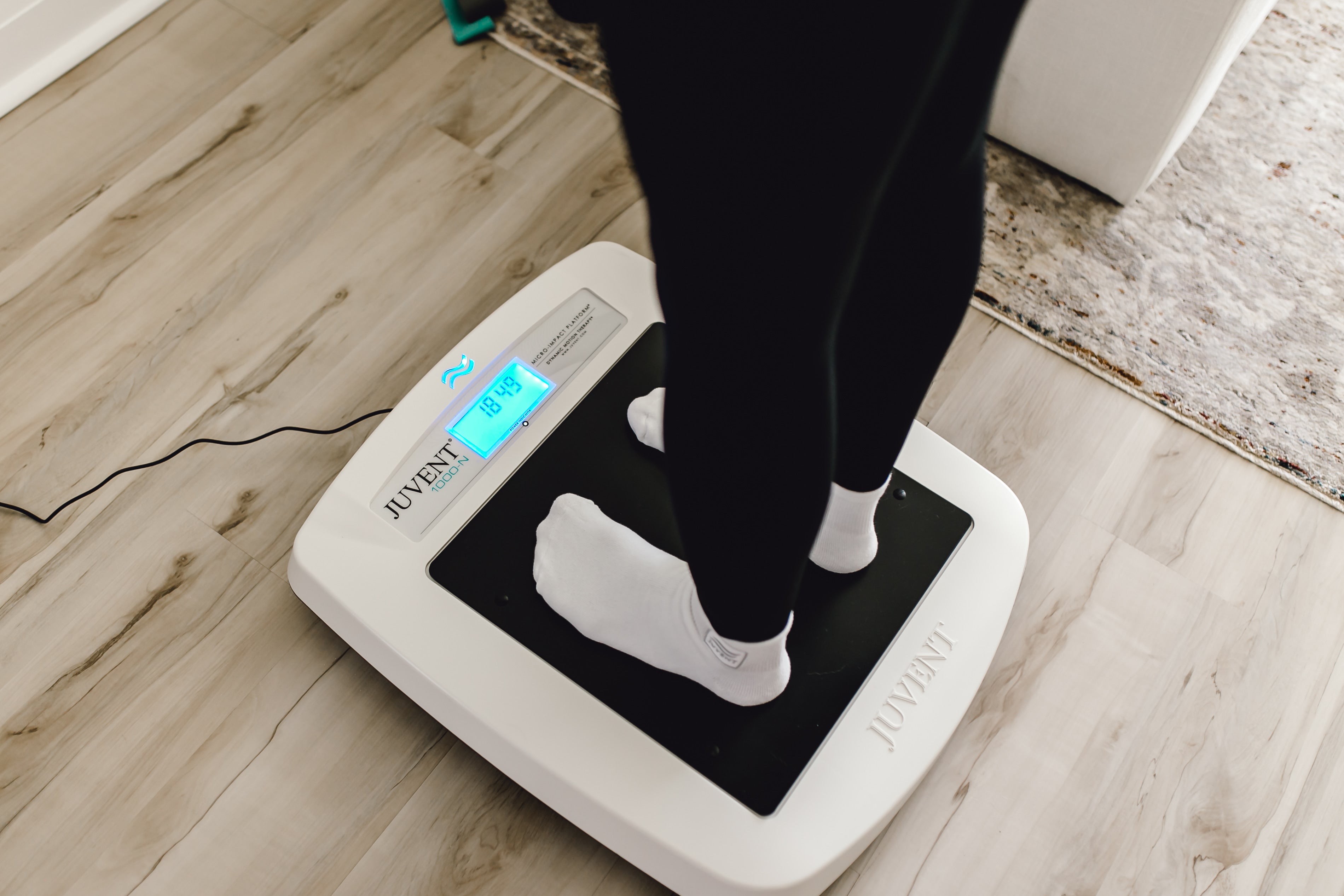
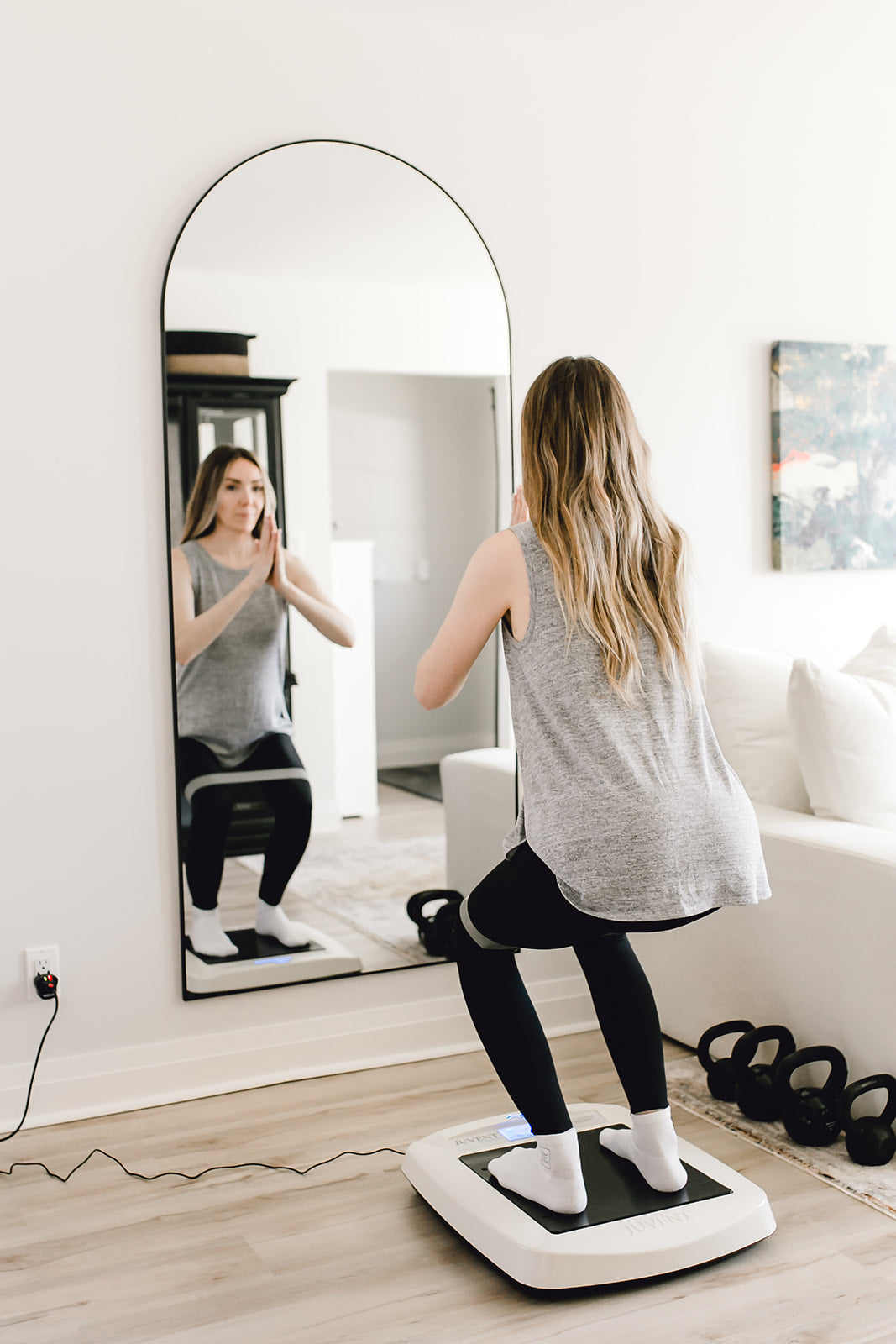
The fear of re-igniting pain from an injury or increasing chronic pain (bad pain) through exercise is very real. This is where the Juvent Micro-Impact Platform® can help. The Juvent uses low-magnitude mechanical stimulation (LMMS), a technology that simulates exercise. Simply by standing on the platform, LMMS sends calibrated vibrations up through your feet and into your body, giving you the movement you need without fear of increasing pain or putting stress on your muscles and joints.
This gentle movement encourages muscle engagement, strengthens your bones, supports circulation, and, with regular use, helps keep your joints from becoming stiff and prevents you from falling into a sedentary lifestyle.
By getting a good sleep, maintaining a nutritious diet, lowering your stress, and engaging in gentle movement every day, you can manage—even reduce—chronic pain.
Consult our FAQs page to learn more, or get in touch with us directly to learn about our platform rental program that lets you experience the Juvent Micro-Impact Platform and LMMS technology before you buy.
FDA Disclaimer
In the US, the Juvent device is considered investigational for the treatment of osteoporosis or improvement/maintenance of bone mineral density and our claims have not been reviewed or cleared by the FDA to treat any disease or condition. The JUVENT® Micro-Impact Platform® is Registered as a Class I medical device for exercise and rehabilitation.
Sources
- Poor Sleep Can Change Your Reaction to Pain, Harvard Health Publishing. [https://www.health.harvard.edu/pain/poor-sleep-can-change-your-reaction-to-pain]
- Chronic Pain: What It Is, Symptoms, Treatment & Management, Cleveland Clinic. [https://my.clevelandclinic.org/health/diseases/4798-chronic-pain]
- Daily Habits That Support Chronic Pain Relief and Recovery, Vertex Pain Physicians. [https://vertexpainphysicians.com/daily-habits-that-support-chronic-pain-relief-and-recovery/]
Get the latest insights and contents on all things bone and body health. Signup for our newsletter!
Share:
Spring Prep for Stronger Bones: How to Ease Back Into Outdoor Activity Safely
In Recognition of National Osteoporosis Awareness and Prevention Month