


Many people probably remember an older relative talking about their circulation issues as though they were a minor inconvenience, but poor circulation can be far more serious than that. When blood flow becomes reduced or impaired, the body’s tissues and organs may not receive the oxygen and nutrients they need to function properly. Left unaddressed, circulation problems can contribute to more significant health complications over time.
If you have questions about poor circulation and want to arm yourself with accurate information, that’s a commendable and proactive first step toward better self-care and long-term wellness. Below are some of the most common questions people ask about circulation problems, along with practical, science-backed answers that can support healthier lifestyle decisions.
What Are the First Signs of Bad Circulation?
Poor circulation can cause a number of symptoms, including cold hands, tingling in the hands or feet, and occasional cramping. Many people assume these changes are simply part of aging, spending too much time sitting, or “sleeping funny” on an arm or leg. But these subtle changes can sometimes signal impaired blood flow.
For many, the earliest warning sign is persistent coldness in the hands or feet. When circulation slows, oxygen-rich blood may not reach the body’s outer extremities as efficiently, leaving fingers and toes feeling unusually cold.
Another common symptom is numbness, or that “pins and needles” sensation in the hands, feet, or lower legs. Some individuals also experience muscle heaviness, cramping, or aching in the calves while walking or exercising. And while this discomfort may improve with rest, it often returns once activity resumes.
Swelling in the ankles, feet, or lower legs can also indicate circulatory issues. When blood and fluid are not moving efficiently through the body, fluid retention may develop, creating a feeling of tightness or heaviness in the lower extremities. Varicose veins, which appear enlarged, twisted, or swollen near the skin's surface, may similarly suggest blood pooling rather than healthy blood flow and circulation.
A change in skin color is also worth paying attention to. Pale, bluish, or mottled skin tone, particularly in the legs and toes, may indicate reduced oxygen delivery to tissues. In some cases, the skin may also appear thinner or shinier than usual.
Slow-healing cuts or sores on the feet and legs are another important warning sign that should not be ignored, as healthy circulation plays a vital role in tissue repair and recovery.
Persistent fatigue may accompany circulation problems as well. When tissues throughout the body receive less oxygen and fewer nutrients, energy levels can decline, leaving individuals feeling unusually tired even after adequate rest.
While these symptoms do not necessarily indicate a serious vascular condition, they warrant your attention. If you’re experiencing ongoing or worsening symptoms such as these, consult your healthcare professional for a proper evaluation and diagnosis.
How Do You Know if You Have Poor Circulation?
Many people wonder whether their feelings of fatigue or stiffness indicate poor circulation or something else. The answer often comes down to frequency and progression. Cold hands after being outdoors or sitting by an open window on a chilly day are normal. Persistent symptoms that interfere with your comfort or daily functioning are not to be ignored.
What Causes Poor Circulation?
While circulation can naturally change as we age, many other factors can contribute to the condition, including prolonged inactivity, smoking, diabetes, obesity, stress, high blood pressure, and certain cardiovascular conditions. The American Heart Association identifies several of these factors, including smoking, diabetes, high blood pressure, excess weight, and physical inactivity, as risk factors for peripheral artery disease. In many cases, poor blood circulation is not a single issue but a combination of lifestyle and underlying health factors that gradually affect blood vessels and blood flow.
How Can You Improve Poor Circulation?
The encouraging news is that certain lifestyle choices can improve circulation and overall vascular health. Research supports the importance of staying active. A systematic review and meta-analysis found that prolonged, uninterrupted sitting progressively impaired vascular function in the lower limbs. Research has also found that even relatively brief movement may make a difference, with one study finding that a 10-minute walk restored measures of lower-leg vascular function following prolonged sitting. For those wondering how to fix poor circulation, healthcare professionals often recommend a combination of consistent low-impact movement, staying hydrated, maintaining a nutrient-rich diet, avoiding prolonged sitting, managing stress levels, and speaking with a physician about underlying medical conditions that may require treatment.
How Does Movement Impact Circulation?
Movement matters because muscle contractions naturally support healthy blood flow throughout the body. However, not everyone can comfortably do rigorous exercise routines because of pain, mobility limitations, fatigue, or joint sensitivity.
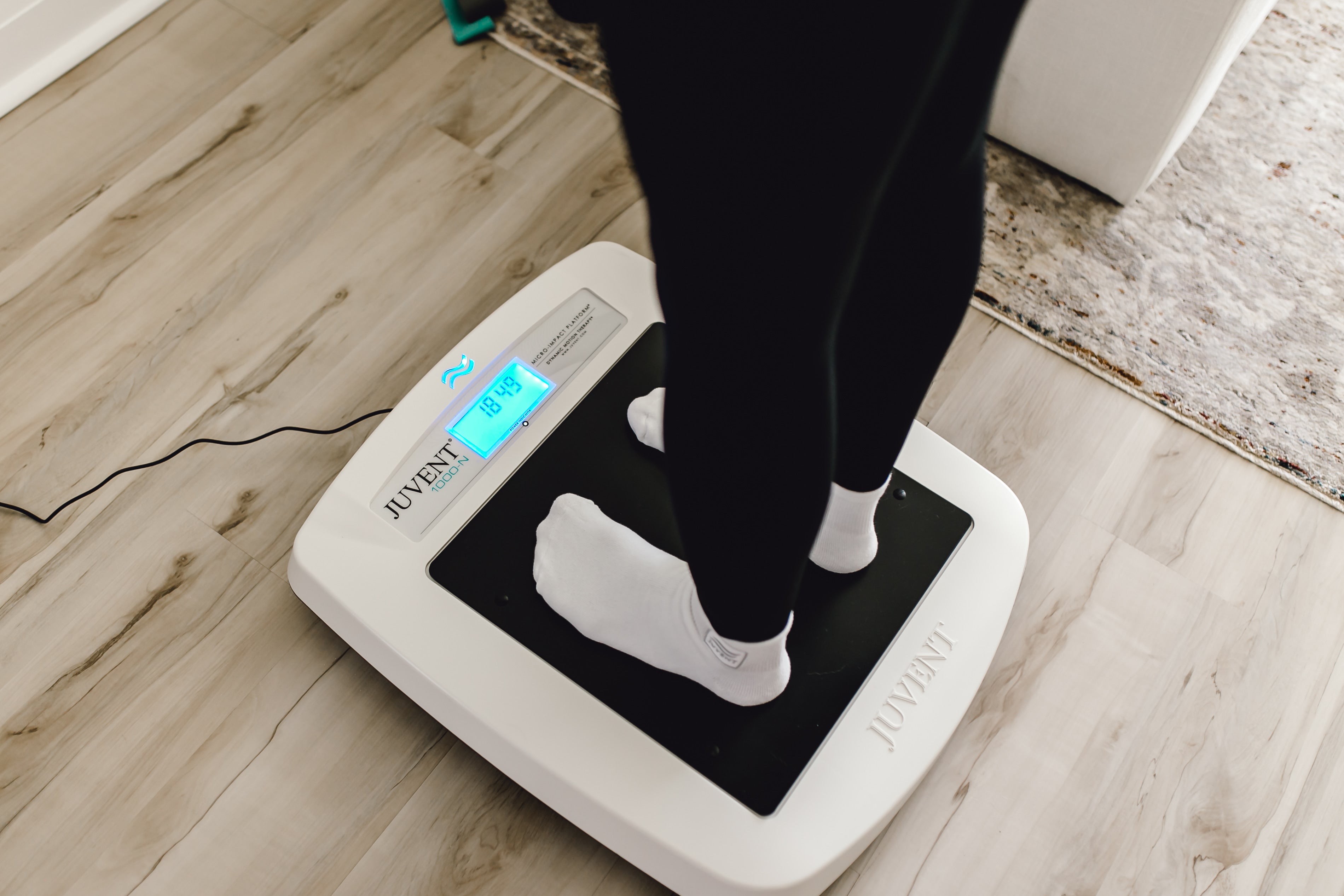
Incorporating the Juvent Micro-Impact Platform® into your daily routine may offer supportive benefits. An FDA-registered Class I medical device, Juvent uses gentle, low-magnitude mechanical stimulation delivered through the body while standing on the platform. The technology was designed to support healthy circulation, balance, mobility, and bone health without placing excessive strain on the joints.
Combined with physician-guided care and healthy lifestyle habits, the Juvent Micro-Impact Platform may help support circulation and the body’s natural fluid movement processes.
While no wellness device is intended to diagnose, treat, cure, or prevent disease, adopting consistent daily habits that support circulation can play a meaningful role in your long-term health and quality of life.
Learn more about the Juvent Micro-Impact Platform by consulting our FAQs page, and get in touch with our team to learn about our new rental program for those who want to try before they buy.
FDA Disclosure
In the US, the Juvent device is considered investigational for the treatment of osteoporosis or improvement/maintenance of bone mineral density, and our claims have not been reviewed or cleared by the FDA to treat any disease or condition. The JUVENT® Micro-Impact Platform® is registered as a Class I medical device for exercise and rehabilitation.
Sources:
-
Poor Circulation [https://my.clevelandclinic.org/health/diseases/21882-poor-circulation]
-
Understand Your Risk for Peripheral Artery Disease [https://www.heart.org/en/health-topics/peripheral-artery-disease/understand-your-risk-for-pad]
-
The Acute Effects of Prolonged Uninterrupted Sitting on Vascular Function: A Systematic Review and Meta-analysis [https://pubmed.ncbi.nlm.nih.gov/34334722/]
-
Impact of prolonged sitting on lower and upper limb micro- and macrovascular dilator function [https://pubmed.ncbi.nlm.nih.gov/25929229/]

Get the latest insights and contents on all things bone and body health. Signup for our newsletter!
Share:
Your Skeleton Is Alive: Understanding Bone Remodeling Throughout Life
Vibration Plate Benefits