


Have you ever gotten up from a chair where you’d been sitting for an extended period only to realize your muscles felt like they’d locked into place? It can be as surprising as it is painful to experience sudden stiffness in your back or legs, and make you wonder just how long you’d been in that same position. It can also make you wonder if the chronic pain you experience in the colder months is now seeping into your everyday life.
Today, we’re going to alleviate these concerns. Daily micro-movements (also known as ‘exercise snacks’) can help keep your joints and muscles from feeling creaky and help you manage chronic pain. These are short, low-impact actions you can fit into your schedule without disrupting your routines. Let’s take a closer look at micro-movements and how small but consistent daily activity helps reduce stiffness.
Why Joint and Muscle Stiffness Happens
Muscle stiffness is very common, with up to 1 in 4 people experiencing either short or long-lasting bouts at least once in their lives.
Joints and muscles can become stiff after periods of inactivity because the fluid in your joints, which lubricates them, thickens into a gel-like state, tightening the tissues. Your muscles and tendons can also become stiff naturally while you sleep. Inflammation can lead to stiffness by releasing chemicals that cause joint tissues to swell, irritating nerves, increasing fluid, and creating pressure that restricts movement.
Another culprit is aging. As we age, our cartilage can dry out and stiffen, while joint linings produce less lubricating fluid. Of course, we can’t bend back the arrow of time, but we can prioritize our overall physical wellness going forward.
Ways to Relieve Muscle Stiffness
Research suggests that breaking up sitting with frequent posture changes and brief movement can reduce musculoskeletal discomfort. In sedentary office workers, for example, a combination of more standing/walking time and more posture transitions is linked to reduced neck, back, and knee stiffness.
Exercises for stiffness can include gentle stretching, simple movements for joints, back, and neck pain, and low-impact activities such as yoga, tai chi, and walking. Stiff neck exercises, stiff knee exercises, and stiff back exercises can be grouped into exercise snacks to improve range of motion and mitigate discomfort.
At-Home Micro-Movement That Improves Circulation and Reduces Stiffness
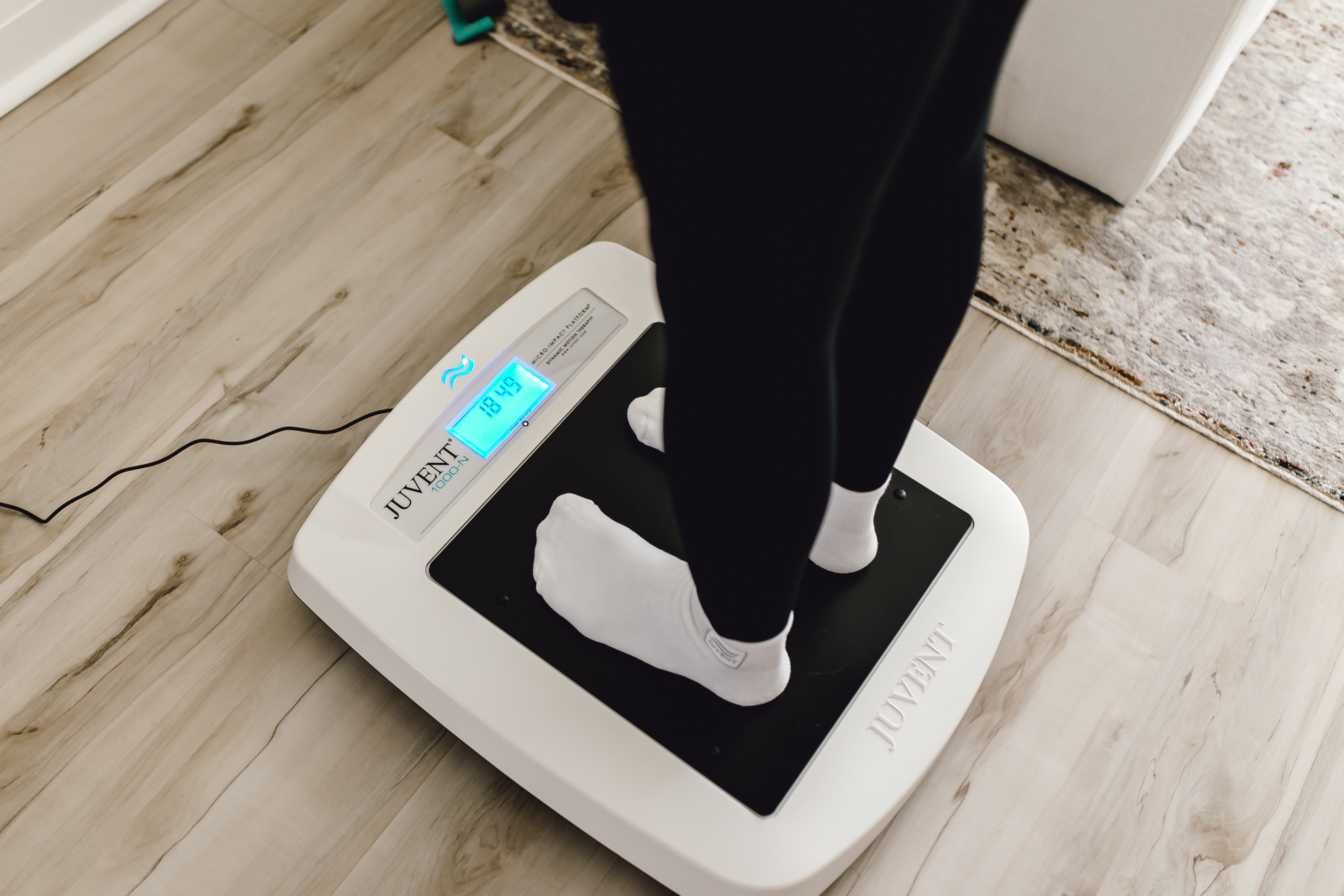
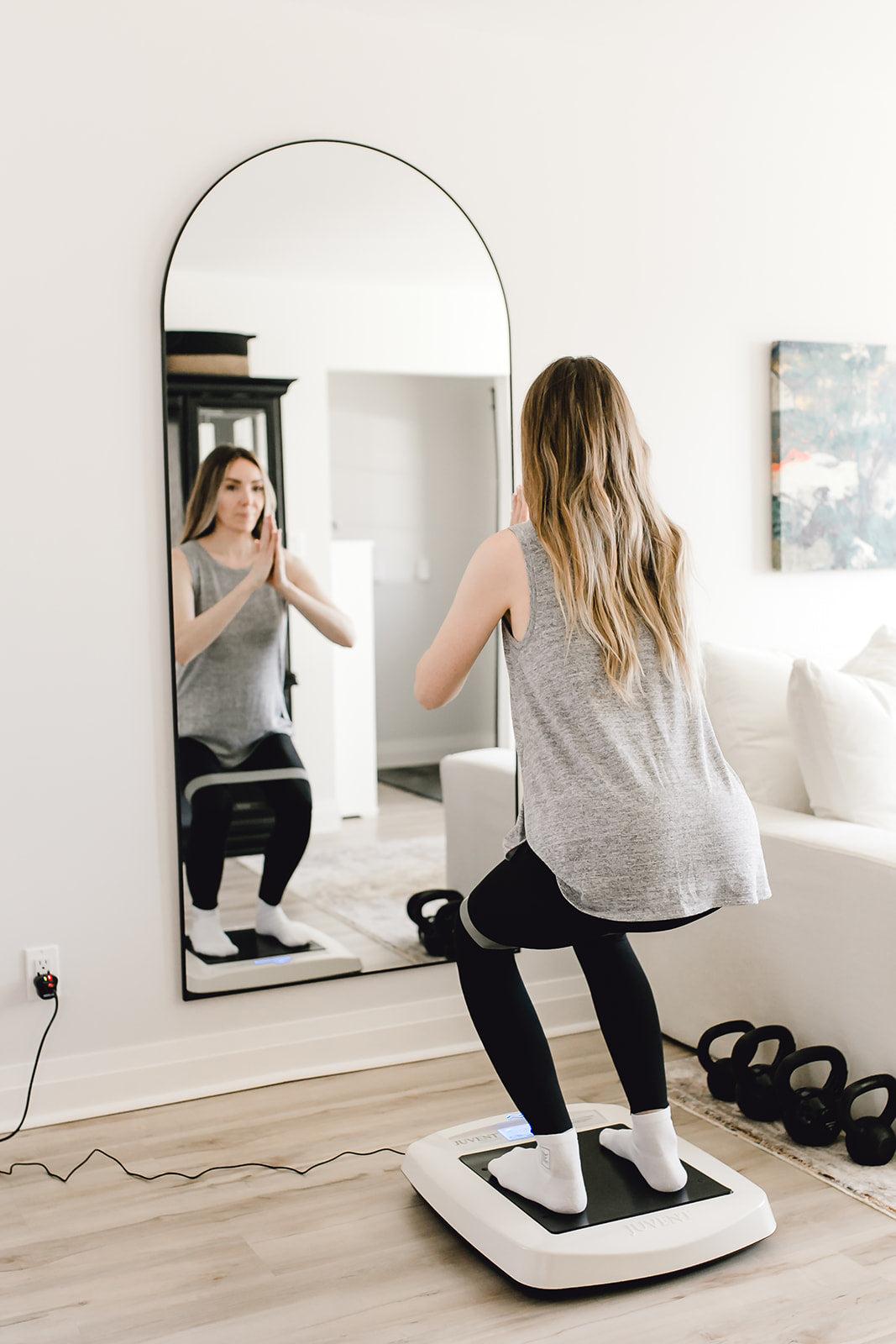
For a micro-movement routine you can implement at home that will help manage stiffness, improve circulation, and strengthen your bones, Juvent’s Micro-Impact Platform® is a multi-pronged clinically researched intervention.
The Juvent is a stand-on platform that’s about as small as a scale but is equipped with advanced technology that delivers low-magnitude mechanical stimulation (LMMS) throughout your body, from your feet up. Specifically designed to calibrate vibrations to your body’s own frequency (between 32 – 37 Hz), built-in sensors and software tailor the frequency and force levels (about 0.3 to 0.4 g) to your needs, providing a practical way to integrate daily micro-movements to reduce stiffness. Just small bursts of movement - less than 20 minutes per day - is all you need to reduce tension and begin feeling more limber.
And since LMMS has been widely researched in the context of bone health, the Juvent also makes sense for people looking to improve mobility.
To learn more about the Juvent Micro-Impact Platform, consult our FAQ page. Or reach out directly with questions about the available models. Ask us about our rental program, a great way to experience the Juvent before deciding on the one that’s right for you. Get in touch today, and let’s keep stiffness and discomfort at bay.
FDA Disclosure
In the US, the Juvent device is considered investigational for the treatment of osteoporosis or improvement/maintenance of bone mineral density and our claims have not been reviewed or cleared by the FDA to treat any disease or condition. The JUVENT® Micro-Impact Platform® is Registered as a Class I medical device for exercise and rehabilitation.
Get the latest insights and contents on all things bone and body health. Signup for our newsletter!
Share:
Why Colder Weather Can Increase Discomfort—And What You Can Do Naturally