


For anyone who’s heard the opening bars of Beethoven’s Symphony No. 5, you’ll notice how an entire string section playing in unison creates a singular resonant sound that no cello or violin could replicate on its own. The effect is synergistic, showing us that the whole is often greater than the sum of its parts.
While we can look outward to find all kinds of examples of this principle in play, we can also look inward. With the right elements working together, we can improve our digestive health.
Fiber, fermented foods, and physical movement each contribute to digestive health on their own, but when they’re combined, they help support gut motility (how food moves through your gastrointestinal tract), microbial diversity, nutrient absorption, and the integrity of the intestinal lining, creating a more comprehensive foundation for natural digestive support.
Fiber and Digestion
Fiber provides the structural foundation for healthy digestion. Insoluble fiber, found in vegetables and whole grains, adds bulk to stool and helps promote regularity. Soluble fiber, present in foods like oats, legumes, and beans, absorbs water and forms a gel-like consistency that softens stool and supports smoother transit through the digestive tract, naturally.
The relationship between fiber and digestive health goes beyond regularity. Fiber also acts as a prebiotic, serving as fuel for beneficial bacteria in the colon. As these bacteria ferment fiber, they produce short-chain fatty acids (SCFAs), including butyrate, which acts as a primary energy source for the cells lining the colon and helps support the integrity of the gut barrier.
What’s the Deal With Fermented Foods?
Fermented foods have long been valued across many cultures for their contributions to digestive wellness. Foods such as kimchi, kefir, yogurt, miso, and sauerkraut contain live microorganisms that help support microbial diversity within the gut ecosystem.
Research surrounding fermented foods for digestive health continues to grow, particularly regarding their role in helping beneficial bacteria flourish while crowding out less desirable microbes. Fermentation partially breaks down complex carbohydrates and proteins, making certain foods easier to digest while improving the bioavailability of nutrients such as calcium, iron, and zinc.
Another important factor is the connection between fermented foods and digestion. Fermentation can reduce compounds like phytates and certain FODMAPs (Fermentable Oligosaccharides, Disaccharides, Monosaccharides, And Polyols), types of short-chain carbohydrates (sugars) that are poorly absorbed in the small intestine and can contribute to digestive discomfort and even pain in some individuals.
When combined with fiber-rich foods, fermented ingredients can create a more supportive environment for microbial balance and overall digestive resilience.
Nutrient-Dense Recipes With Fermented Ingredients
To help you incorporate fermented foods into your diet, we’ve curated two tasty recipes for you to try out: the Miso Ginger Salmon Bowl and the vegetarian-friendly Mediterranean Lentil and Kefir Salad.
Miso Ginger Salmon Bowl
This nutrient-dense bowl combines fiber-rich vegetables with fermented ingredients and healthy fats.
Ingredients:
-
1 salmon fillet
-
1 cup brown rice
-
1 cup steamed broccoli
-
1 shredded carrot
-
1 tablespoon white miso paste
-
1 teaspoon grated ginger
-
1 teaspoon sesame oil
-
1 tablespoon low-sodium soy sauce
-
2 tablespoons kimchi
Directions
Whisk miso, ginger, sesame oil, and soy sauce together. Brush over salmon and bake at 400°F for 12–15 minutes. Assemble rice, vegetables, and salmon in a bowl and top with kimchi before serving.
Mediterranean Lentil & Kefir Salad
This vegetarian option combines plant-based fiber with probiotic-rich ingredients for a balanced meal.
Ingredients:
-
1 cup cooked lentils
-
1 diced cucumber
-
1 cup cherry tomatoes
-
¼ cup chopped parsley
-
2 tablespoons crumbled feta
-
¼ cup plain kefir
-
1 teaspoon lemon juice
-
1 teaspoon olive oil
-
Pinch of sea salt and pepper
Directions
Combine lentils and vegetables in a bowl. Whisk together kefir, lemon juice, olive oil, salt, and pepper to make a dressing. Toss together and let sit in the refrigerator for 20–30 minutes to allow flavors to meld. Top with feta before serving.
Functional Movement and Digestive Motility
Movement also plays an important role in digestive wellness. Everyday activities such as walking and gentle exercise physically stimulate the digestive tract, supporting healthy motility.
A review published in Clinical Gastroenterology and Hepatology found that regular moderate physical activity stimulates peristalsis, the wave-like muscular contractions that propel material through the digestive system, and supports gastrointestinal function, particularly in individuals with constipation or bloating.
Movement also influences the gut-brain axis. Stress management practices such as walking or yoga may help calm nervous system activation, supporting healthier digestive function overall.
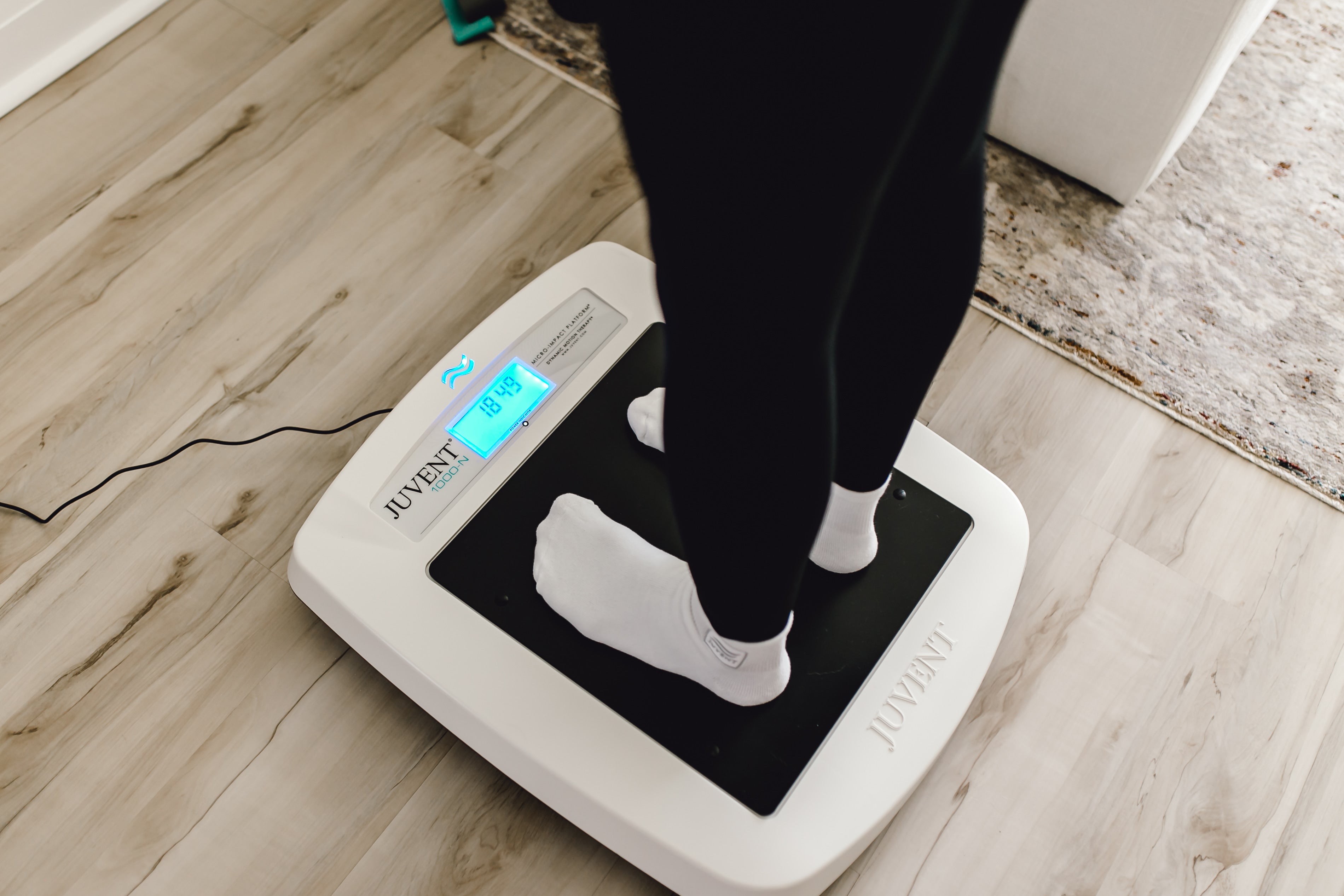
This holistic approach to health and wellness is one reason many individuals incorporate the Juvent Micro-Impact Platform® into their daily routines. The platform simulates low-impact exercise by delivering gentle, low-magnitude mechanical stimulation through the body. These are vibrations that mimic the effects of natural movement. When paired with balanced nutrition, 20 minutes per day on the Juvent platform can help support circulation, healthy motility, and overall wellness.
A Synergistic Wellness Strategy
Digestive health is best achieved through the interaction of multiple supportive systems working together over time.
Fiber helps nourish beneficial bacteria and support regularity. Fermented foods contribute probiotics and help improve nutrient absorption. Functional movement supports peristalsis, circulation, and digestive motility. Together, these elements create a more comprehensive and balanced approach to wellness.
HydroxyBMD³™ AM/PM supports this interconnected philosophy. In addition to contributing to bone and cardiovascular wellness through nutrients such as calcium, vitamin D3, and vitamin K2, the supplement system also includes MicrobiomeX®, a citrus-derived ingredient designed to target digestive and microbiome health by increasing the production of butyrates, mentioned earlier. Emerging research reveals citrus polyphenols may help modulate the gut microbiome, support the integrity of the gut barrier, and help regulate inflammatory responses within the digestive tract.
The body functions best when multiple supportive elements work together consistently. Learn more about the Juvent Micro-Impact Platform by consulting our FAQs page, and how the HydroxyBMD³™ AM/PM system also contributes to overall health and wellness. Get in touch with any questions. At Juvent, we’re here to help optimize your wellness from the inside out.
FDA Disclosure
In the US, the Juvent device is considered investigational for the treatment of osteoporosis or improvement/maintenance of bone mineral density and our claims have not been reviewed or cleared by the FDA to treat any disease or condition. The JUVENT® Micro-Impact Platform® is Registered as a Class I medical device for exercise and rehabilitation.
These statements have not been evaluated by the US Food and Drug Administration. These products are not intended to diagnose, treat, cure, or prevent any disease.
Sources
- The Health Benefits of Fermented Foods, From Kimchi to Kefir, Cedars-Sinai. [https://www.cedars-sinai.org/stories-and-insights/healthy-living/the-health-benefits-of-fermented-food-from-kimchi-to-kefir]
- Fermented Foods, Health and the Gut Microbiome, Nutrients. [https://pmc.ncbi.nlm.nih.gov/articles/PMC9003261/]
- Exercise and Gastrointestinal Function and Disease: An Evidence-Based Review of Risks and Benefits, Clinical Gastroenterology and Hepatology. [https://www.cghjournal.org/article/S1542-3565%25252803%25252900178-2/fulltext]
- Exercise Influence on the Microbiome-Gut-Brain Axis, Gut Microbes. [https://pmc.ncbi.nlm.nih.gov/articles/PMC6748614/]
- A Citrus Fruit Extract High in Polyphenols Beneficially Modulates the Gut Microbiota of Healthy Human Volunteers in a Validated In Vitro Model of the Colon, Nutrients. [https://pmc.ncbi.nlm.nih.gov/articles/PMC8619629/]

Get the latest insights and contents on all things bone and body health. Signup for our newsletter!
Share:
Common Nutrient Gaps in Adults over 50 and How HydroxyBMD3TM Helps Fill Them
The Top Five Myths about Neuropathy