


When the U.S. Department of Health and Human Services (HHS) published the official Physical Activity Guidelines for Americans, the key message was "move more, sit less."
The guidelines primarily highlight the overall health benefits of regular physical activity, which we associate with strengthening muscles, enhancing cardiovascular function, managing weight, and releasing endorphins that improve mood. Daily movement also increases bone density, improves mobility, and prevents chronic diseases like diabetes and heart disease.
When we think about the benefits of exercise, however, we rarely link it to our gut health. But did you know the gut requires regular movement just as much as skeletal muscles? This is because the digestive tract is composed of smooth muscle tissue. When the body is physically inactive, the gut's muscles weaken.
Can Lack of Movement Cause Digestive Issues?
A sedentary lifestyle not only leads to low energy levels and weight gain, but it also directly impacts how efficiently the digestive system functions. Without consistent movement, the natural contractions that move food through the intestines, known as peristalsis, can slow. This often results in common digestive issues such as bloating and uncomfortable abdominal heaviness.
Reduced movement also affects circulation. When blood flow to the digestive organs is reduced, the gut doesn’t receive the oxygen and nutrients it needs to function optimally. Over time, this can influence the balance of bacteria within the microbiome, reducing beneficial strains that support the gut lining.
Constipation is another consequence of a low-movement lifestyle. When your digestive muscles are not regularly engaged, waste can remain in the colon longer than it should, allowing excess water to be reabsorbed and contributing to harder stools and irregularity.
And then there’s stress. Through the gut-brain axis, elevated cortisol levels triggered by stress interfere with digestion, creating a cycle of sluggish digestion and discomfort.
Exercise and Gut Health: What The Latest Research Tells Us
Recent research into the “gut-muscle axis,” reveals that, in addition to contributing to healthy digestion, movement influences the gut microbiome in ways that affect strength, metabolism, and overall physical wellness.
A 2026 gut microbiota study published in BMJ Journals identified Roseburia inulinivorans as a key microbe linked to increased muscle strength in both younger and older adults. This supports the idea that the gut plays a direct role in physical performance.
This relationship functions as a feedback loop. Strength training increases beneficial microbes, which in turn support muscle function. When activity declines, these microbial benefits diminish quickly.
Further research shows that resistance training can influence the gut microbiome over time, even without dietary changes, particularly in individuals experiencing the greatest strength gains. Even moderate activity has measurable effects.
These findings reinforce the point that consistent movement supports not only how the gut functions day to day but also its contribution to overall resilience.
How the Gut and Muscles Work Together
Several biological mechanisms explain this connection. Exercise increases the production of short-chain fatty acids such as butyrate, acetate, and propionate, which support muscle repair, reduce inflammation, and improve metabolic balance.
Low-impact movement also improves peristalsis, helping food move more efficiently through the digestive system and creating a healthier environment for beneficial bacteria. At the same time, regular activity supports immune function by reducing intestinal permeability and systemic inflammation.
For those focusing on gut exercises, exercises for gut health, or exercises for lower gut support, consistency is the key, not intensity. And the best way to maintain a consistent routine is to make the right type of daily movement simple and accessible.
The Role Daily Movement Plays
Even with the best intentions, maintaining regular movement is not always easy. Time constraints, mobility limitations, or lifestyle demands can make routine exercise difficult to sustain.
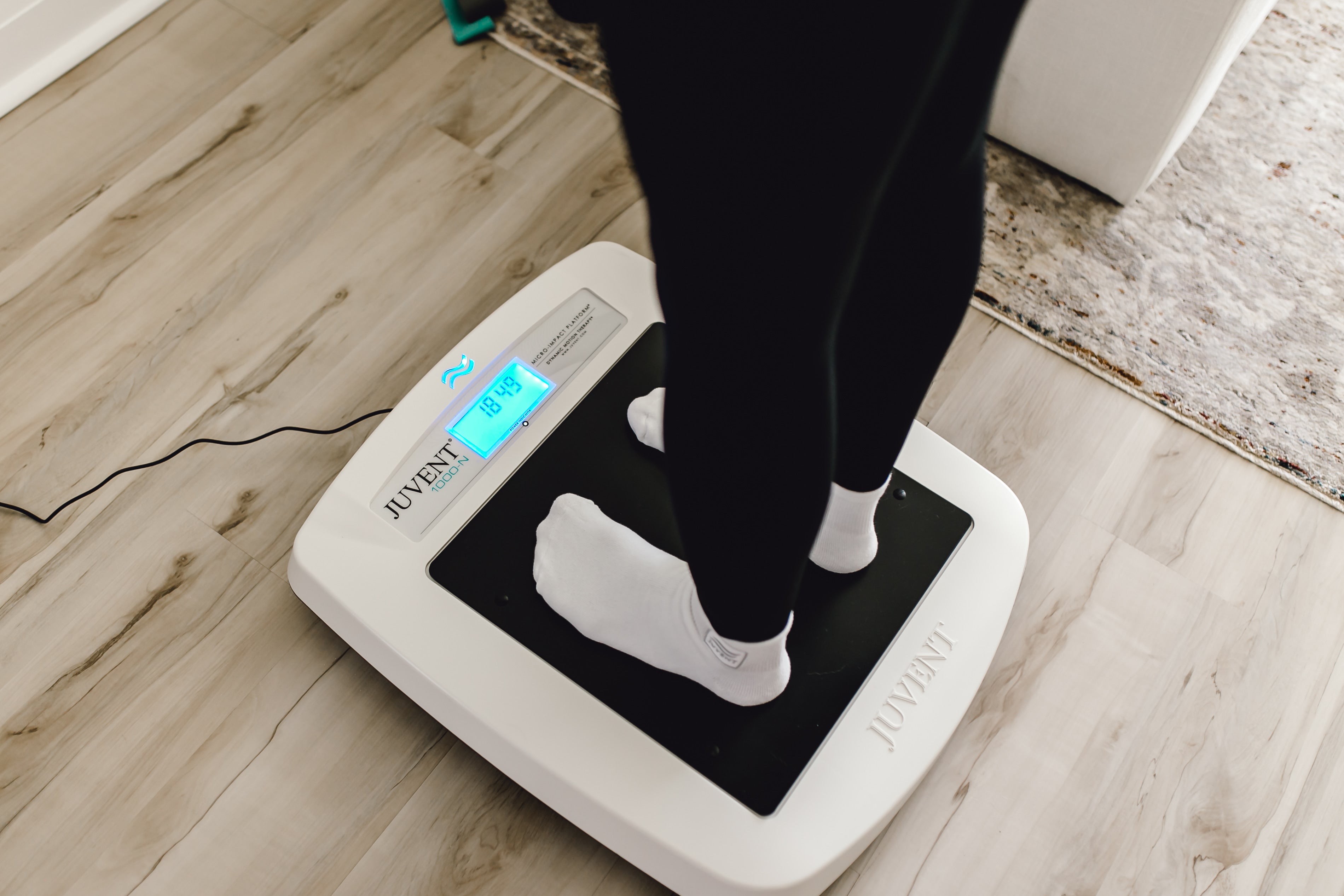
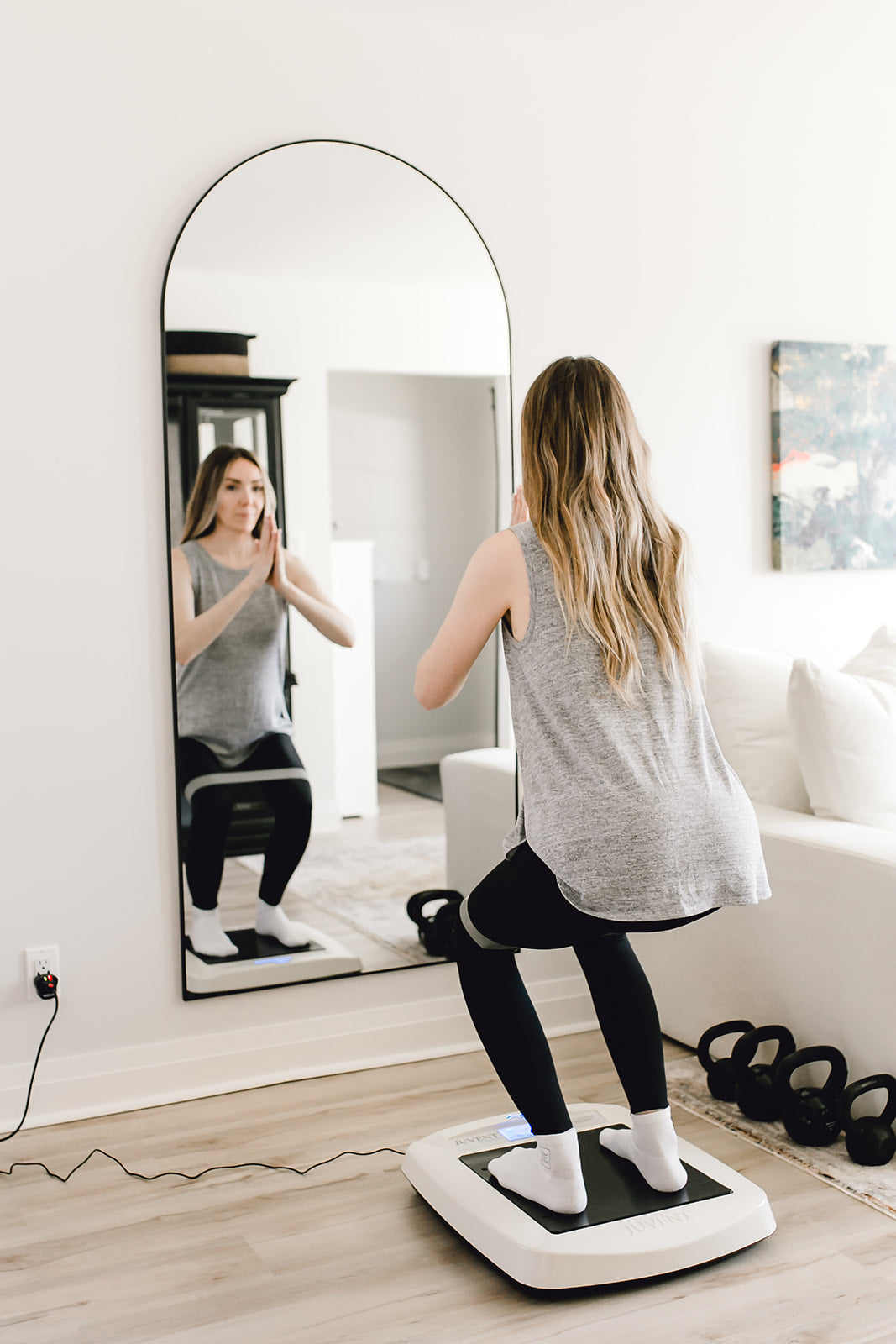
The Juvent Micro-Impact Platform® offers a practical way to introduce daily, gentle movement at home. By delivering low-magnitude mechanical stimulation, the platform supports circulation, balance, and bone health in ways that align with the body’s natural processes.
Used alongside an overall health and wellness plan, it can make the consistent movement that a well-functioning gut and musculoskeletal system depend on as easy as stepping on the scale and standing for 10 to 20 minutes. Over time, this routine contributes to a healthy digestive rhythm, improved circulation, and overall resilience.
Just as movement supports the gut from a mechanical and circulatory standpoint, targeted nutritional support plays a complementary role. Juvent’s HydroxyBMD³ supplement system is designed to work from the inside out by supporting the gut microbiome, which is essential for efficient nutrient absorption, immune balance, and overall digestive function. At the core of the formula is MicrobiomeX®, a clinically studied citrus flavonoid that helps promote a healthier gut microbial environment. This is important because the microbiome directly influences how well the body absorbs key nutrients involved in bone, cardiovascular, and metabolic health. When used alongside consistent daily movement, HydroxyBMD³ helps reinforce the same systems the Juvent platform supports, creating a more complete, synergistic approach to maintaining digestive efficiency, strength, and long-term resilience.
Easy At-Home Routines to Keep You Moving
When daily movement becomes part of a routine, the benefits extend beyond fitness. The digestive system becomes more efficient, the microbiome stays in balance, and the body is better equipped to maintain long-term health.
In addition to keeping muscles engaged in physical movement to improve digestive health, the Juvent platform supports better bone health, circulation, and balance, all of which are important for athletic resilience and overall wellness as we age.
Learn more about the Juvent Micro-Impact Platform on our FAQs page, and explore how pairing daily movement with targeted nutritional support, such as the HydroxyBMD³ supplement system, can support your gut, bones, and overall health. Get in touch for more about our Micro-Impact Platform rental program if you prefer to try the platform before you buy.
FDA Disclosure
In the US, the Juvent device is considered investigational for the treatment of osteoporosis or improvement/maintenance of bone mineral density and our claims have not been reviewed or cleared by the FDA to treat any disease or condition. The JUVENT® Micro-Impact Platform® is Registered as a Class I medical device for exercise and rehabilitation.
These statements have not been evaluated by the US Food and Drug Administration. These products are not intended to diagnose, treat, cure, or prevent any disease.
Sources
- Strong Muscles Start in the Gut, Leiden University Medical Center. [https://www.lumc.nl/en/news/2026/strong-muscles-start-in-the-gut/]
- Resistance Training Reshapes the Gut Microbiome in a Longitudinal 8-Week Intervention in Sedentary Adults, Sports Medicine - Open. [https://pmc.ncbi.nlm.nih.gov/articles/PMC12989468/]
Get the latest insights and contents on all things bone and body health. Signup for our newsletter!
Share:
How HydroxyBMD³™Fits Into a Holistic Approach to Aging Well
Pain Flare-Ups: Lifestyle Triggers That Make Them Worse (and How to Reduce Them)