

Swelling can be easy to notice and difficult to explain. A shoe may feel tighter, a sock may leave a deeper mark, or one ankle may look different from the other. Those observations can be useful, but they do not identify the cause. A picture or an indentation cannot reliably distinguish a temporary change from a condition that needs prompt medical assessment.
This swelling and pitting edema guide helps you learn the terminology, recognize reasons to seek care, and prepare an observation summary. The illustrations are conceptual teaching aids, not a way to grade your body. You do not need to press on swollen tissue to use the tool. Start with the care guidance, then explore the explanations and questions you may want to bring to a healthcare professional.
Key Takeaways
- Edema describes fluid-related swelling; it does not explain why swelling developed.
- Pitting means an indentation remains after pressure, but a home observation cannot establish a cause or severity.
- New unexplained swelling in one leg, sudden changes, or red, hot, painful swelling needs prompt assessment.
- Swelling with chest pain, breathing difficulty, faintness, or coughing blood can be an emergency.
- Vibration, massage, compression, and supplements should not be used to troubleshoot unexplained swelling.
Start With Symptoms That Change the Next Step
Before exploring a visual guide, consider whether you have breathing difficulty, chest pain, coughing blood, faintness, or another severe symptom. Seek emergency help when these occur with swelling. In the United States, call 911 when appropriate. Do not wait for a tool result, an online appointment, or a change in the appearance of the leg before getting urgent help.
New swelling in one leg without an obvious explanation also needs prompt medical assessment, particularly if it is sudden, painful, red, or hot. Fever, feeling unwell, or rapidly worsening swelling are additional reasons to seek care. A low-looking pitting grade or a temporary improvement does not cancel those concerns. The tool keeps these instructions visible regardless of which illustration you select.
What Is Edema?
Edema is swelling associated with fluid accumulating in tissues. It can affect the feet, ankles, legs, and other areas. The term is descriptive rather than diagnostic. Many different circumstances can produce swelling, and the location, timing, symptoms, medications, and health history influence what a clinician considers. A guide can explain the word without deciding which explanation applies to you.
This distinction matters because the same visible feature can occur in different situations. Swelling after a long period of sitting is not something a website can automatically label harmless, and persistent swelling is not something to attribute to lifestyle without assessment. If the change is new, unexplained, worsening, or recurrent, ask for clinical advice rather than using an image comparison as reassurance.
What Does Pitting Mean?
Pitting describes an indentation that remains after pressure is applied to swollen tissue. Clinicians may assess this during an examination, along with many other observations. The presence of pitting does not reveal a single diagnosis, and its absence does not prove that swelling is minor. The tool's animation simply demonstrates what the term means using an abstract tissue model.
Do not repeatedly press on a painful area or perform a home challenge to see how deep an indentation becomes. Skin condition, tissue characteristics, examination technique, and other factors affect what is observed. If you already noticed a mark, you can mention it during your appointment. The most useful next step is to report the change and associated symptoms, rather than trying to reproduce a clinical test precisely.
Why Pitting Grades Are Not a Home Severity Scale
You may encounter descriptions from 1+ through 4+ in charts and medical notes. These are clinical shorthand systems, and the exact definitions can vary. They should not be treated as a universal ruler that assigns a condition to a millimeter depth or a specific recovery time. A person cannot safely determine the importance of swelling by matching a leg to one simplified drawing.
The guide presents increasing indentation as a conceptual sequence without prescribing pressure duration, depth measurements, or return-time cutoffs. It also avoids using the selected illustration to recommend treatment. If a medical note includes a pitting grade, ask the clinician what it means in that examination and how it relates to the care plan. That explanation is more useful than translating the grade through an unrelated online chart.
Pitting and Nonpitting Are Descriptions
Nonpitting swelling may not leave a visible indentation in the same way. This difference can be relevant during assessment, but it does not split all swelling into safe and unsafe categories. Tissue changes can be complex, and more than one process can contribute. An educational illustration cannot identify a lymphatic, venous, medication-related, or other cause based on appearance alone.
Keep your observations neutral. You might say that an ankle looked larger by evening or that a usual sock left a different mark. Avoid converting the observation into a diagnosis such as poor lymphatic drainage without assessment. Describing what happened, where it happened, and when it started gives your healthcare professional more useful information than a confident label derived from a symptom search.
What to Record Before an Appointment
The observation card asks about location, when you first noticed the change, whether it affects one side or both, and what accompanying symptoms you want to report. You can add a short note about recent changes, such as travel, injury, a procedure, or medication adjustments. These prompts organize a conversation; they do not determine how urgent the situation is.
If taking a photograph helps document a visible change, keep the date and use a consistent view when practical. Do not delay care to collect a series of pictures. Avoid interpreting day-to-day differences as proof of improvement or deterioration without context. The summary stays in the page until you choose to copy it, and it is not submitted to a clinical service or monitored for emergencies.
Medication and Health History Questions
Some medicines and health conditions can be relevant to swelling. Bring a current medication list, including over-the-counter products and supplements, to your appointment. Mention recent changes even if they seem unrelated. Do not stop a prescribed medicine because an online article mentions swelling as a possible effect. Your prescribing team can review the situation and advise whether any change is appropriate.
It can also help to explain whether the swelling is new or part of a previously assessed condition. If you already have a management plan, tell the clinician what has changed from your usual pattern. A new symptom deserves attention even when you have experienced swelling before. The tool therefore does not use a past diagnosis to automatically downgrade the importance of present symptoms.
Why Compression and Massage Need Context
Compression garments and other measures can be appropriate in particular care plans, but they are not universal solutions for every swollen limb. The cause, circulation, skin condition, fit, and other factors can influence suitability. Avoid buying a stronger garment or starting a massage technique simply because an illustration resembles what you see. Ask the relevant clinician for instructions tailored to your situation.
If a professional has already prescribed compression or other care, follow that plan and ask how to respond to changes. The guide does not replace fitting advice, treatment monitoring, or an assessment of new pain. Practical education should help you recognize the limits of a general resource, especially when a suggested action would apply pressure or mechanical stimulation to tissue that has not been assessed.
Where Gentle Movement and Juvent Fit
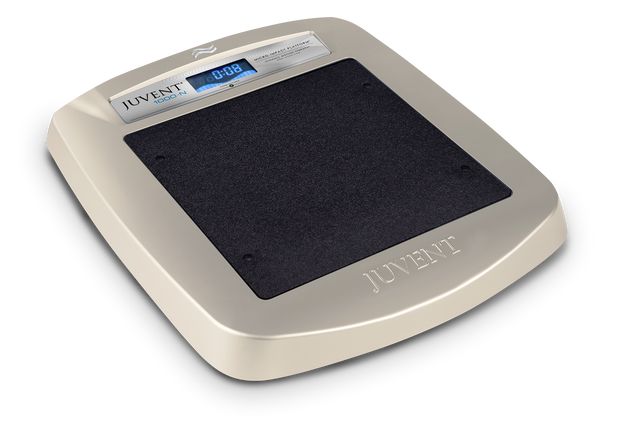
Movement can be part of general wellness or a clinician-directed plan, but unexplained swelling is a reason to understand the cause first. A vibration platform should not be used as a home test for circulation or as a way to clear suspected fluid buildup. Do not interpret the word gentle as medical clearance when a new symptom is present.
Juvent's educational material discusses low-magnitude mechanical stimulation and research questions related to movement and fluid flow. Those discussions do not establish treatment for every cause of edema or authorize use on a newly swollen limb. If you are interested in a platform after assessment, ask your clinician about the specific device and intended use. The swelling guide itself does not issue a product recommendation or an exercise protocol.
Use the Guide Without Waiting for Certainty
You do not need to decide whether swelling is pitting before contacting a healthcare professional. You also do not need to complete every field in the observation card. A short statement such as new swelling in one ankle with pain can be enough to begin the right conversation. When severe associated symptoms are present, seek urgent help instead of refining the description.
For less immediate questions, the visual vocabulary can make an appointment easier. You can ask what the examination showed, whether further assessment is needed, what care is appropriate, and which changes should prompt another call. The most useful outcome is a clearer plan from a qualified professional, supported by accurate observations rather than a self-assigned grade.
Frequently Asked Questions
Can I diagnose edema from a sock mark?
No. A sock mark is an observation, not a diagnosis. Describe any new or persistent swelling and associated symptoms to a healthcare professional. Do not assume a mark proves either a serious condition or a harmless explanation, and do not rely on its appearance to decide whether to seek care.
Is nonpitting swelling less serious?
Not necessarily. Pitting and nonpitting describe examination findings and do not independently determine cause or urgency. New, unexplained, or worsening swelling still deserves appropriate assessment. Severe associated symptoms require action regardless of whether an indentation is visible.
Should I press on the swelling to choose a grade?
No. The tool is designed to work without a self-examination. Its illustrations teach terminology rather than provide testing instructions. Avoid repeated pressure on painful or affected tissue and report what you have already observed to your healthcare professional.
Can I try vibration to move the fluid?
Do not use vibration to troubleshoot unexplained swelling. The cause needs assessment, and some symptoms require urgent care. If you have an established diagnosis and are considering a platform, discuss the specific device with your clinician and follow the applicable instructions.
Does completing the observation card contact a doctor?
No. It creates a local summary you can copy for your own use. No one monitors the page or receives an alert. Seek care directly when needed, and call emergency services for severe symptoms such as chest pain or breathing difficulty with swelling.
Sources & further reading
Sources support the educational context. Interactive matching and question prompts are editorial aids, not validated clinical models. Food values are curated reference examples, not a complete database.