


We usually think of constipation as a temporary, yet wholly uncomfortable condition that we can resolve by increasing our fiber intake. But digestion doesn’t operate in isolation. It’s part of a well-regulated process that relies on steady blood flow. In fact, the relationship between digestive system circulation and overall gut health is considerably intertwined (more so than many people realize).
The circulatory system delivers oxygen and nutrients to every organ, including the gastrointestinal tract. After you eat, blood flow to the digestive organs increases to support enzyme production, muscle contractions, and nutrient absorption. When circulation is strong, digestion tends to be smoother and more efficient. When it’s underperforming, symptoms like bloating, irregularity, and constipation can follow.
The Link Between Digestion and Blood Flow
The connection between digestion and circulation is foundational to how the body processes food. The digestive tract is metabolically active, requiring a continuous supply of oxygen-rich blood to break down food and move it through the system. This process, known as splanchnic circulation, accounts for a substantial portion of the heart’s blood flow (particularly after meals).
Blood flow supports several essential digestive functions. It powers peristalsis, which are the rhythmic contractions that move food through the intestines. It also facilitates the transportation of nutrients from the small intestine into the bloodstream, where they can be delivered to cells throughout the body.
Research published in Physiology Reviews highlights how gastrointestinal blood flow is tightly regulated to match digestive demand, ensuring proper motility and absorption. When that regulation is disrupted, digestive efficiency can decline.
How Does Poor Circulation Affect Digestion?
When circulation is impaired, the digestive system doesn’t receive the oxygen and nutrients it needs to function optimally. This can slow motility, leading to constipation or irregular bowel movements. It can also reduce enzyme activity and impair nutrient absorption, leaving the body undernourished despite adequate intake.
In more serious cases, reduced blood flow (ischemia) can damage intestinal tissue and cause post-meal pain. Even milder forms of poor circulation can contribute to chronic digestive discomfort and inflammation.
There’s also a connection to the gut microbiome. Reduced oxygen delivery can create an imbalanced environment in the intestines, disrupting beneficial bacteria and contributing to dysbiosis. A review in Nature Reviews Gastroenterology & Hepatology notes that intestinal perfusion plays a key role in maintaining gut barrier integrity and microbial balance.
In short, compromised circulation can affect nearly every aspect of digestive system function, from movement and absorption to immune defense.
Circulation, Motility, and Constipation
Constipation is often linked to slowed intestinal movement, and circulation plays a direct role in that process. The muscles lining the digestive tract depend on oxygen and nutrient delivery to contract effectively. When blood flow is reduced, these contractions can weaken, leading to delayed transit time and harder stools.
This is why lifestyle factors that improve circulation (things like walking, hydration, and balanced nutrition) can also support regularity. But for individuals experiencing persistent issues, a more comprehensive approach might help.
A Holistic Strategy for Supporting Circulation and Digestion
Prioritizing healthy circulation doesn’t just benefit the heart; it also affects digestion. While regular movement is one of the most effective ways to promote blood flow, not everyone can consistently meet recommended levels of daily physical activity.
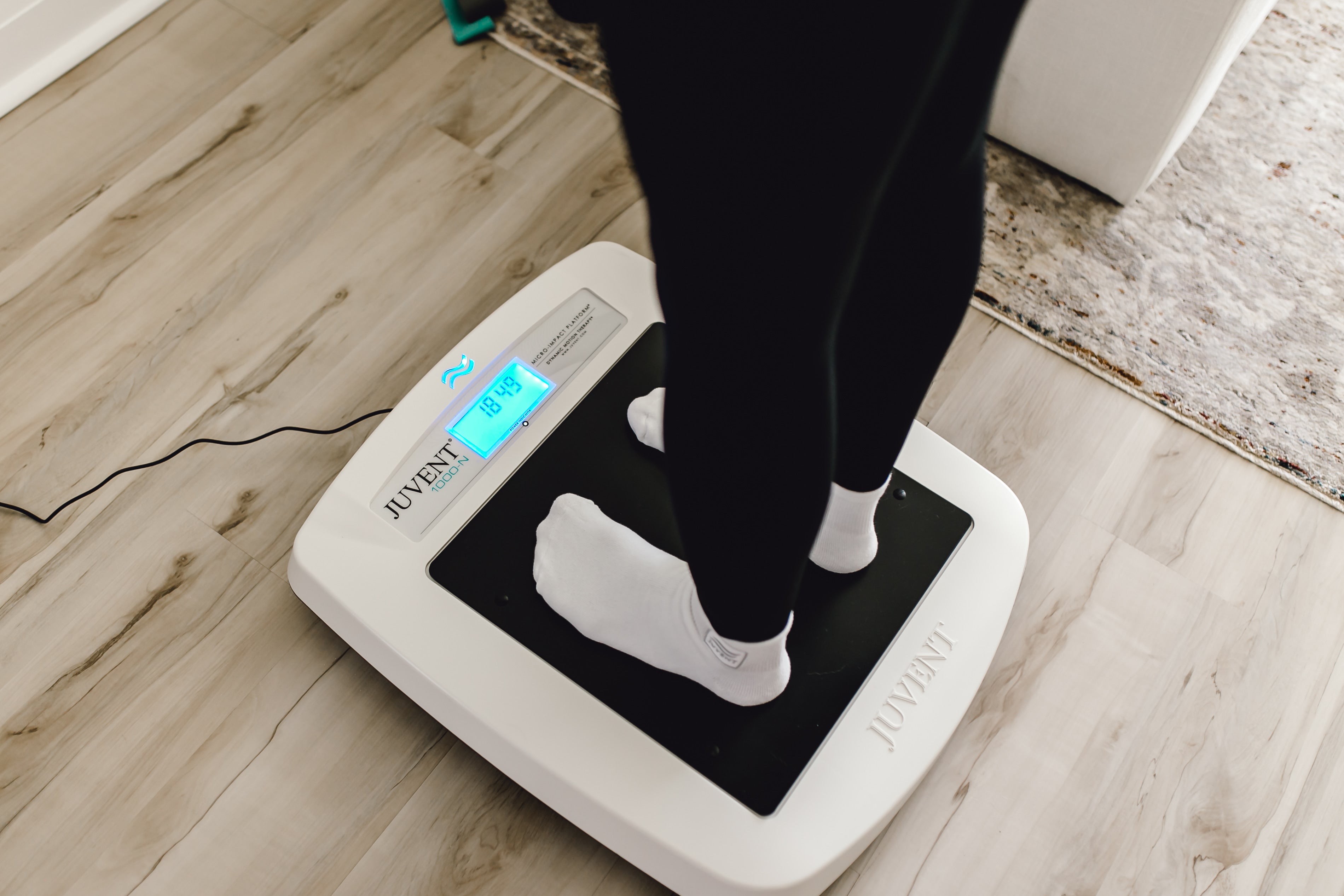
The Juvent Micro-Impact Platform® offers an alternative approach to exercise by delivering low-magnitude mechanical stimulation that mimics the effects of walking. This gentle, consistent stimulation supports circulation and lymphatic flow, helping to deliver oxygen and nutrients throughout the body, including the digestive tract.
When paired with Juvent’s HydroxyBMD³™ AM/PM system, you’re implementing a comprehensive approach to gut health. The AM supplement formula includes ingredients like Bonolive® and VitaCholine®, which support endothelial function and vascular elasticity, both of which are important for maintaining healthy blood flow. MicrobiomeX® supports gut barrier integrity and may help reduce inflammation, promoting a more stable digestive environment.
MicrobiomeX combines flavonoids extracted from Citrus sinensis (orange) and Citrus paradisi (grapefruit), standardized to hesperidin (about 88.2%) and naringin (about 6.5%). It’s designed to be metabolized by the gut microbiota, beneficially shifting microbiome composition, lowering gut inflammation, and strengthening the gut barrier—a mechanism BioActor calls the “Flavobiotic effect”.
A randomized, double-blind, placebo-controlled clinical trial in 50 overweight patients with altered microbiota showed that daily supplementation with 500 mg of MicrobiomeX® for 12 weeks significantly altered the composition of short-chain fatty acids (SCFAs), compounds that play an essential role in maintaining the intestinal barrier and regulating the immune system, by directly affecting the alteration of the microbial composition of the gut. In particular, the proportion of butyrate to total SCFAs increased significantly.2
Complementary TIM-2 in-vitro gut model experiments (using participants’ fecal samples) confirmed increased butyrate, acetate, and valerate production.3
At night, the formulation shifts toward recovery, delivering bioavailable minerals that align with the body’s natural repair cycle. This dual-phase system complements circulation support by ensuring the nutrients needed for tissue maintenance and metabolic function are readily available.
Together, you’re making the most of broader good circulation benefits that extend beyond heart health to help with digestion, nutrient utilization, and overall vitality.
Supporting the System as a Whole
Recognizing the role of blood flow in digestion makes it easier to understand why some digestive issues persist despite targeted interventions. Supporting circulation through movement, nutrition, and thoughtful supplementation can help address the root causes of digestive issues.
For those looking for a more integrated approach, combining the mechanical stimulation of the Juvent Micro-Impact Platform with targeted nutritional support offers a practical way to align circulation and digestion for overall health and wellness.
Learn more on our FAQs page, and get in touch with us if you have any questions. We’re here to help.
FDA Disclosure
In the US, the Juvent device is considered investigational for the treatment of osteoporosis or improvement/maintenance of bone mineral density, and our claims have not been reviewed or cleared by the FDA to treat any disease or condition. The JUVENT® Micro-Impact Platform® is registered as a Class I medical device for exercise and rehabilitation.
These statements have not been evaluated by the US Food and Drug Administration. These products are not intended to diagnose, treat, cure, or prevent any disease.
Sources:
-
The Gastrointestinal Circulation: Physiology and Pathophysiology [https://pubmed.ncbi.nlm.nih.gov/26140727/]
-
Gut Microbiota in Health and Disease [https://journals.physiology.org/doi/full/10.1152/physrev.00045.2009]
-
Stevens Y et al. Randomized Clinical Study: Efficacy of MicrobiomeX® on microbiome composition and gut inflammation in healthy overweight individuals (Publication in preparation)
-
Citrus Extract High in Flavonoids Beneficially Alters Intestinal Metabolic Responses in Subjects with Features of Metabolic Syndrome [https://doi.org/10.3390/foods12183413]

Get the latest insights and contents on all things bone and body health. Signup for our newsletter!
Share:
Plantar Fasciitis Stretches and Exercises That Actually Work